

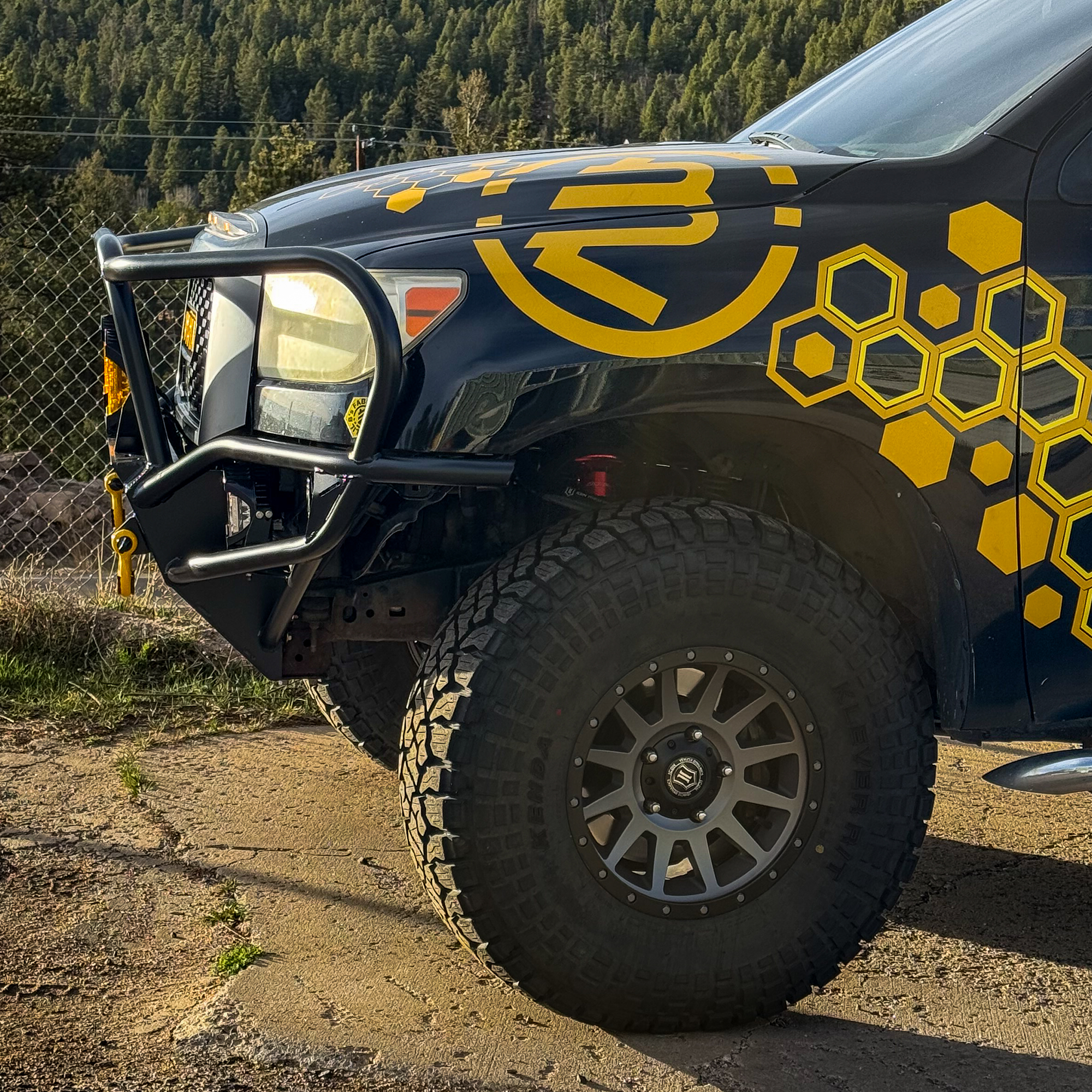
The Cheapest Part Is Rarely the Cheapest Upgrade
Every off-road enthusiast has heard some version of the same advice: "Buy once, cry once."
At first glance, it sounds like a justification for spending more money. But after enough time around Toyota builds, trail repairs, and recovery situations, most owners realize there's a reason the phrase has stuck around for so long.
The reality is that every modification has two costs. The first is the purchase price. The second is everything that comes after: installation time, maintenance, repairs, replacement, and performance on the trail.
For owners of a Tacoma, 4Runner, Tundra, FJ Cruiser, or GX Series, the temptation to save money on a bumper, skid plate, recovery point, or other off-road component is understandable. Building a capable rig isn't cheap, and every dollar seems to matter.
The problem is that the lowest-priced option often becomes the most expensive one in the long run.
What looks like a bargain on day one can turn into additional costs, frustration, and even trail failures that far exceed the original savings.

The Price Tag Only Tells Part of the Story
When comparing products online, most people naturally start with the price.
A bumper that costs hundreds less than another option appears to offer immediate value. The challenge is that pricing alone rarely tells the full story of how a part was designed, manufactured, and tested.
To hit lower price points, manufacturers typically need to reduce costs somewhere.
Common areas include:
-
Material thickness
-
Welding time and quality control
-
Mounting hardware
-
Product testing
-
Finishing processes
-
Development and fitment validation
None of these things are obvious in a product photo.
Two bumpers may look nearly identical on a screen, but their long-term durability can be completely different once they're subjected to real-world use.
That's why experienced builders tend to look beyond specifications and focus on how a product was actually designed and built.
Why do some off-road parts cost significantly less?
Lower prices are often achieved through reduced materials, simplified manufacturing processes, or less product development and testing.
Poor Fitment Costs More Than Most People Expect
One of the most common complaints surrounding budget off-road parts isn't outright failure—it's fitment.
Many Toyota owners discover that the biggest expense isn't the part itself. It's everything required to make the part work properly.
A bumper that doesn't align correctly can lead to:
-
Additional fabrication work
-
Elongated mounting holes
-
Improvised brackets
-
Body panel adjustments
-
Excessive installation time
In some cases, owners end up paying a shop to modify a supposedly bolt-on product.
At that point, the initial savings start disappearing quickly.
Modern Toyota platforms have made this issue even more noticeable. Vehicles like the newer GX and Tundra feature tighter body lines, more integrated systems, and less tolerance for manufacturing inconsistencies.
A bumper that is off by a small amount can become obvious immediately.
Time Has Value Too
One cost that's often overlooked is time.
Most enthusiasts enjoy working on their vehicles. That's part of the hobby. But there's a difference between spending a weekend installing quality parts and spending a weekend troubleshooting poor ones.
Anyone who's installed enough aftermarket components has probably encountered:
-
Missing hardware
-
Poor instructions
-
Misaligned mounting points
-
Components requiring modification
What should have been a straightforward installation turns into an all-day project—or even multiple weekends.
The money saved on the initial purchase starts looking less impressive when you factor in the hours spent making the part fit correctly.
Recovery Equipment Is Not the Place to Cut Corners
Some off-road parts are mostly cosmetic. Recovery equipment is not.
Recovery systems experience real loads under real stress. When a vehicle is stuck in mud, snow, sand, or on a rocky obstacle, the forces involved can be substantial.
This is why components such as:
-
Recovery points
-
Winch mounts
-
Shackle mounts
-
Frame tie-ins
need to be engineered differently than appearance-focused accessories.
The concern isn't simply performance. It's safety.
A recovery point that isn't properly integrated into the structure of the bumper can create risks during recovery operations. Components that appear strong enough may behave very differently when subjected to thousands of pounds of force.
This is one area where design, testing, and engineering matter significantly more than appearance.
Are all recovery points equally strong?
No. Recovery performance depends on material selection, mounting design, load distribution, and frame integration.
Trail Damage Is Usually More Expensive Than Prevention
Off-road enthusiasts tend to focus on the cost of upgrades while underestimating the cost of damage.
A quality bumper may seem expensive until it's compared to repairing:
-
Cracked factory plastics
-
Damaged lighting
-
Bent sheet metal
-
Grille replacements
-
Radiator support damage
Many trails don't require extreme crawling to create expensive problems. A single poorly placed rock, hidden rut, or unexpected obstacle can cause significant damage to vulnerable front-end components.
Protection upgrades exist because repairs are often far more expensive than prevention.
The same principle applies throughout a build. Components that survive repeated trail use help avoid costs that don't appear until something breaks.
Modern Toyota Platforms Demand Better Engineering
The off-road industry has changed significantly over the past decade.
Older Toyota platforms were relatively straightforward. A bumper primarily needed to provide protection and fit the frame correctly.
Today's vehicles are far more complex.
Modern Tacoma, Tundra, and GX platforms incorporate systems such as:
-
Toyota Safety Sense (TSS)
-
Radar cruise control
-
Parking sensors
-
Front-facing cameras
-
Advanced cooling systems
As a result, bumper design now requires consideration of factors beyond strength.
A poorly engineered component can create issues involving:
-
Sensor performance
-
Airflow restrictions
-
Cooling efficiency
-
Electronic system compatibility
These aren't concerns that most buyers think about initially. They often only become apparent after installation.
Can a poorly designed bumper affect factory systems?
Yes. Modern vehicles rely on sensors, airflow, and electronic systems that can be impacted by improper aftermarket design.
Cheap Parts Tend to Get Replaced Sooner
One pattern that many experienced builders notice is that budget parts rarely stay on the vehicle for long.
Sometimes they wear out.
Sometimes they fail.
Sometimes they simply don't perform as expected.
Eventually, many owners end up replacing the component with the product they considered buying in the first place.
The result is paying twice:
-
For the original part
-
For the replacement part
What initially looked like a savings becomes an unnecessary expense.
This doesn't mean every affordable product is bad. It means evaluating products based on long-term value instead of upfront price alone.
What Experienced Builders Learn Over Time
Talk to enough long-term Toyota enthusiasts and you'll notice a common trend.
As builds mature, purchasing decisions become more deliberate.
Rather than chasing the lowest price, experienced owners tend to prioritize:
-
Proven fitment
-
Structural integrity
-
Functional design
-
Real-world testing
-
Manufacturer reputation
That's not because they're trying to build the most expensive rig possible.
It's because they've already experienced the cost of replacing components that didn't meet expectations.
Over time, reliability becomes more valuable than savings.
The Goal Isn't Expensive—It's Dependable
There's a misconception that discussions like this are about buying the most expensive product available.
They're not.
The goal isn't spending more.
The goal is spending smarter.
A dependable component that performs consistently, fits correctly, and survives years of use often delivers better value than a cheaper alternative that requires constant attention or replacement.
When evaluating upgrades, the question shouldn't be:
"What's the cheapest option?"
It should be:
"Which option will still be performing well several years from now?"
That perspective tends to produce better builds and fewer regrets.
Where Lil B's Fits In
At Lil B's Custom Fabrication, the focus has always been on building products that hold up to real-world use.
That means prioritizing:
-
Functional design
-
Accurate fitment
-
Recovery-ready construction
-
Modern vehicle integration
-
Long-term durability
Because a bumper isn't just a purchase. It's part of a build that owners depend on for years, both on the road and on the trail.
Conclusion: Buy for the Build You Want to Keep
Every Toyota build represents an investment of time, money, and effort.
Whether you're building a Tacoma, 4Runner, Tundra, FJ Cruiser, or GX, the goal is usually the same: create a vehicle that performs reliably wherever it goes.
The cheapest part on the shelf may accomplish that.
But more often, the parts that deliver the best value are the ones designed to last, fit correctly, and perform when conditions get challenging.
Because in off-roading, the true cost of a component isn't measured by what you pay today.
It's measured by what it costs you tomorrow.
Share:
Memorial Day Sale: Build Your Toyota Before Summer Trail Season
How Bigger Tires Change What You Need From a Front Bumper