


Introduction: Why Numbers Don’t Tell the Full Story
Off-road enthusiasts love quoting approach angles. The higher the number, the more capable the rig seems—at least in theory. But anyone who’s spent time on real trails knows that static measurements don’t tell the full story.
At Lil B’s Custom Fabrication, we’ve built and tested bumpers on countless trails—from Colorado’s red rocks to the icy northern forest runs—and one thing is clear: front-end trail performance depends on a system, not a single measurement. Approach angle is important, but suspension behavior, weight distribution, recovery geometry, and structural rigidity matter just as much.
When we engineer a bumper, we’re not just cutting steel for a spec sheet. We’re testing how it behaves when your rig’s nose is loaded, tires are gripping, and a winch pull is underway.

Dynamic vs Static Approach
Most bumper spec sheets measure approach angle on flat ground with the rig unloaded. But the trail is dynamic.
When your rig encounters a rock ledge:
-
Suspension compresses, shifting weight forward.
-
Tires deform against the terrain, altering ground clearance.
-
Even modest body roll can bring a “high-clearance” bumper into contact with obstacles.
At Lil B’s, we consider how each bumper reacts under real-world weight, articulation, and load transfer, so that approach angle reflects real capability, not just a static number.
Weight Distribution Matters More Than Angle Alone
Many off-roaders underestimate how much front-end weight affects performance. Independent front suspensions (IFS) on Tacomas, 4Runners, and GX models are particularly sensitive. A bumper plus winch can add 120–200 pounds, altering:
-
Brake response and dive under stopping
-
Steering feel and stability
-
Suspension articulation and CV angles
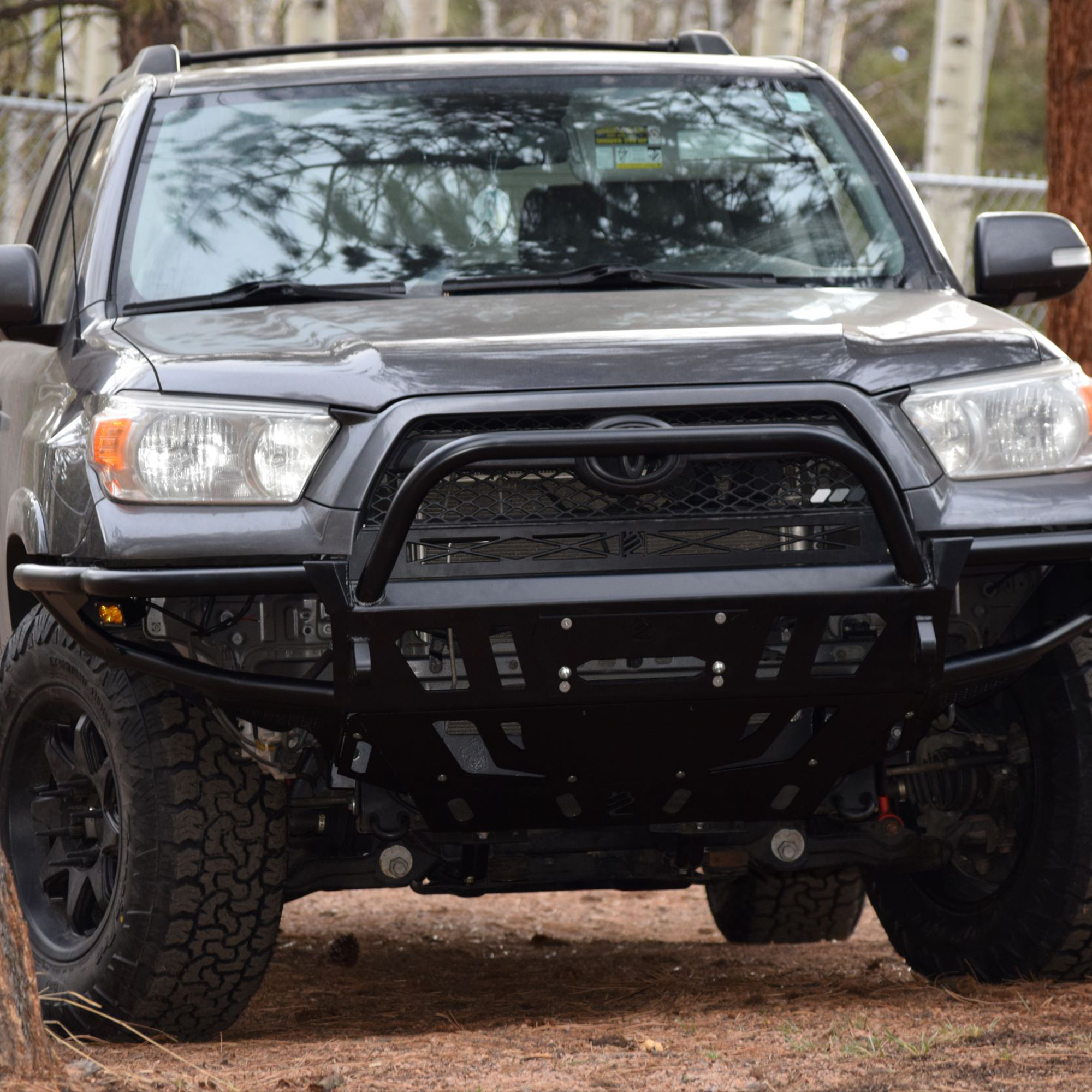
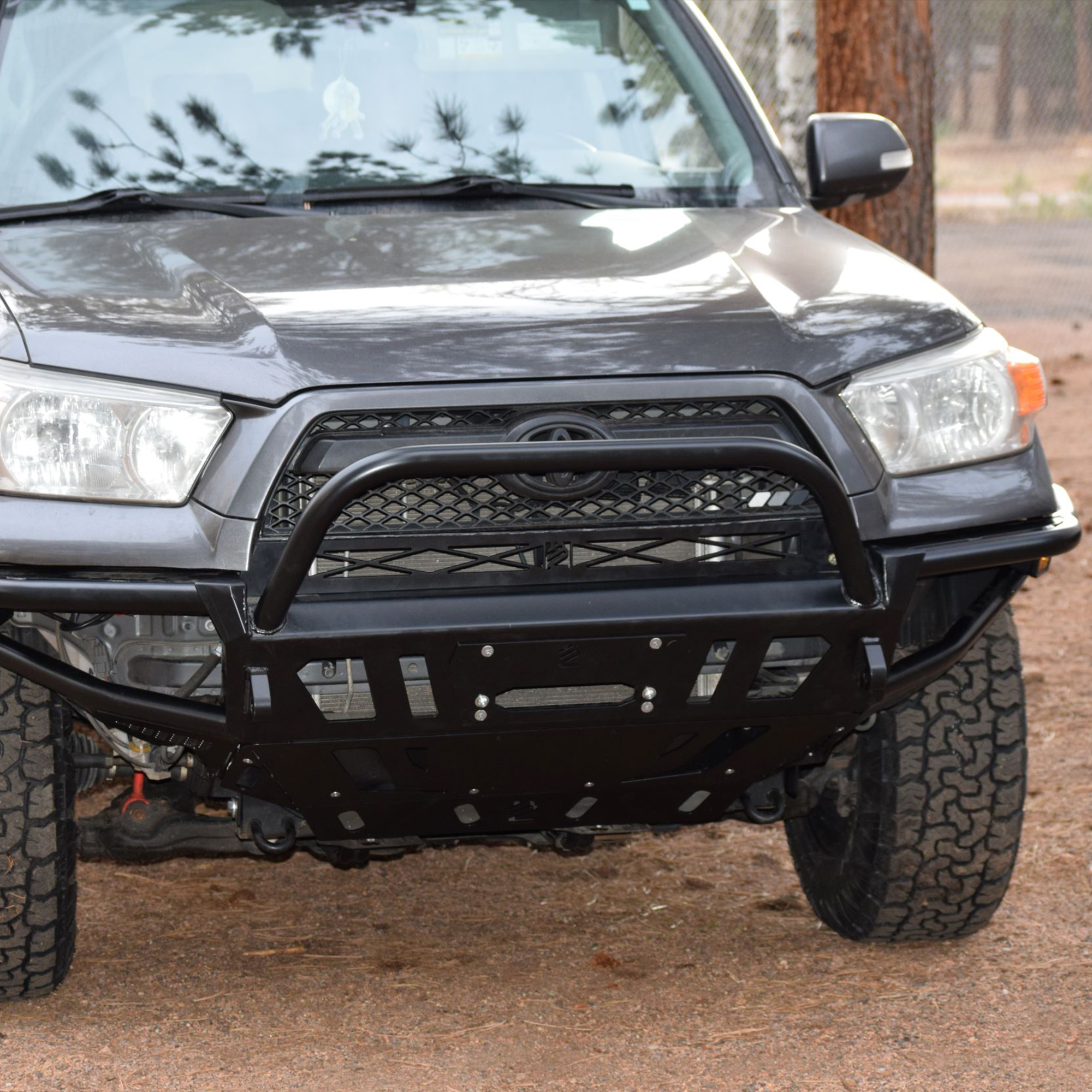
A well-engineered Lil B’s bumper distributes weight close to the frame rails, minimizing leverage that could otherwise compromise trail performance. On steep climbs or rock gardens, this makes the difference between controlled articulation and a scraped nose.
Clearance Isn’t Just About Steel Cuts
While aggressive cuts can improve approach, there’s a trade-off: remove too much material, and you compromise:
-
Component protection (radiator, grille, lights)
-
Structural rigidity
-
Recovery mount placement
The best-performing bumpers balance clearance, strength, and load-bearing capacity. At Lil B’s, we design each bumper to slide over obstacles rather than break on them.
Recovery Geometry: The Overlooked Factor
Front-end performance is about climbing, yes, but also recovery reliability. Poorly placed recovery points can:
-
Pull downward and stress the frame
-
Flex mounts and winch plates
-
Reduce structural integrity under kinetic loads
Lil B’s bumpers have recovery points tied directly to the frame, gusseted for proper load distribution. This ensures your rig can handle extraction without introducing unnecessary stress.
Real Trail Scenarios
Consider a snow-covered ridge:
-
The front tires clear, rear tires spin.
-
Momentum is lost, and a winch is needed.
A standard spec-built bumper may flex or bend under tension, compromising the rig. A Lil B’s bumper is engineered to maintain integrity, protect the frame, and keep steering predictable during recoveries.
Signs Your Bumper May Be Holding You Back
Some indicators:
-
Nose sag on climbs
-
Cracked welds at mounting points
-
Winch plate flex under load
-
Reduced suspension travel
These aren’t cosmetic issues—they directly affect trail safety and performance.
Conclusion: Build Around How You Wheel
Approach angle is one factor, but it’s the combination of structural integrity, weight distribution, recovery design, and suspension integration that defines real front-end trail performance.
A bumper from Lil B’s Custom Fabrication is engineered, tested, and proven to handle these dynamic stresses, so your rig behaves predictably no matter the trail.













Share:
The Hidden Costs of Cheap Bumpers (And Why They Fail on the Trail)
Overbuilt vs Overweight: Finding the Right Balance in Steel Bumpers