

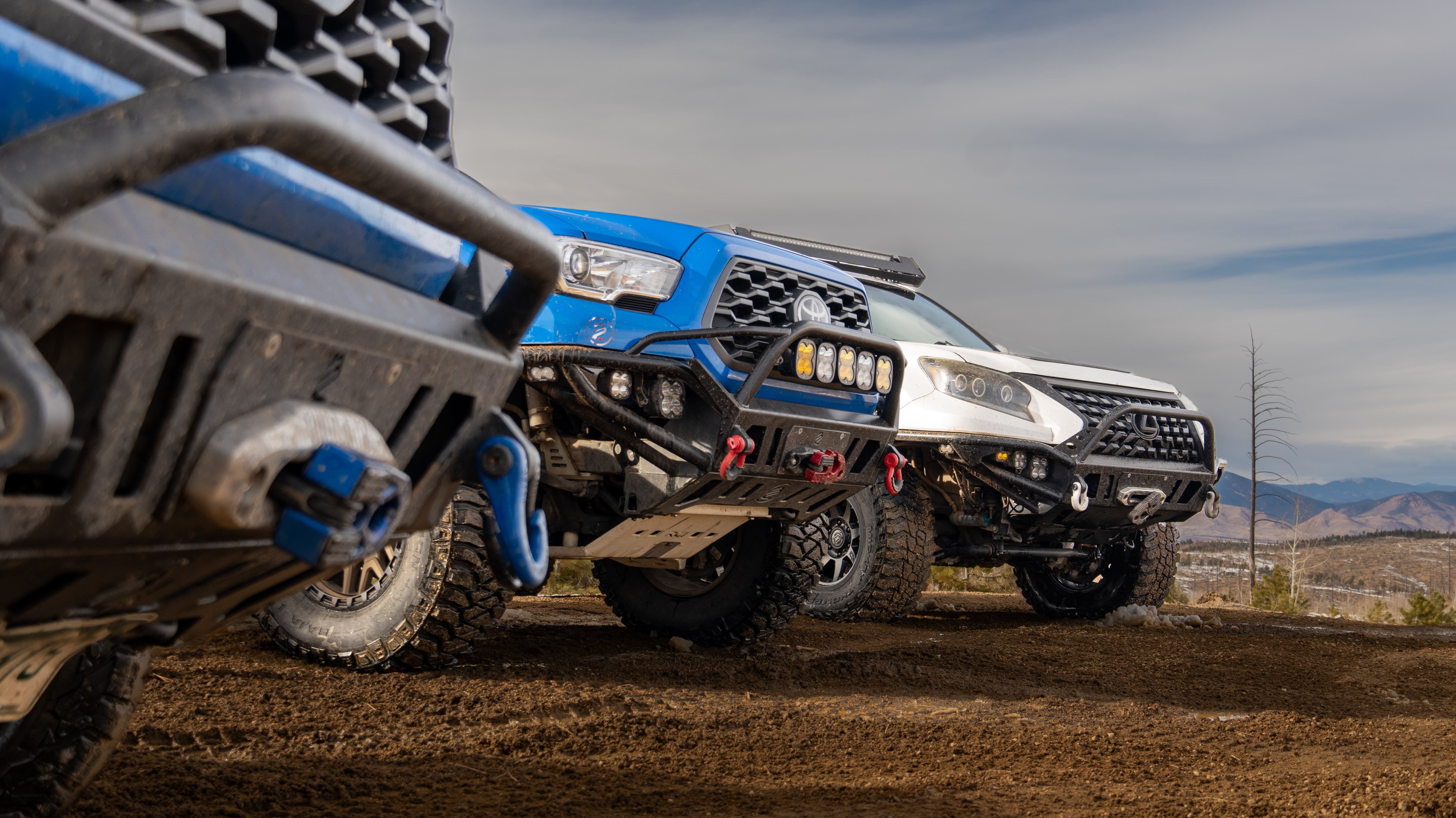
The Old Rules Don’t Fully Apply Anymore
For years, off-road bumper design followed a familiar formula: maximize strength, add recovery capability, improve clearance, and build around simplicity.
That approach worked well on older platforms because older Toyota trucks and SUVs were mechanically straightforward. A bumper primarily needed to fit the frame, support recovery loads, and survive trail abuse.
Modern platforms are different.
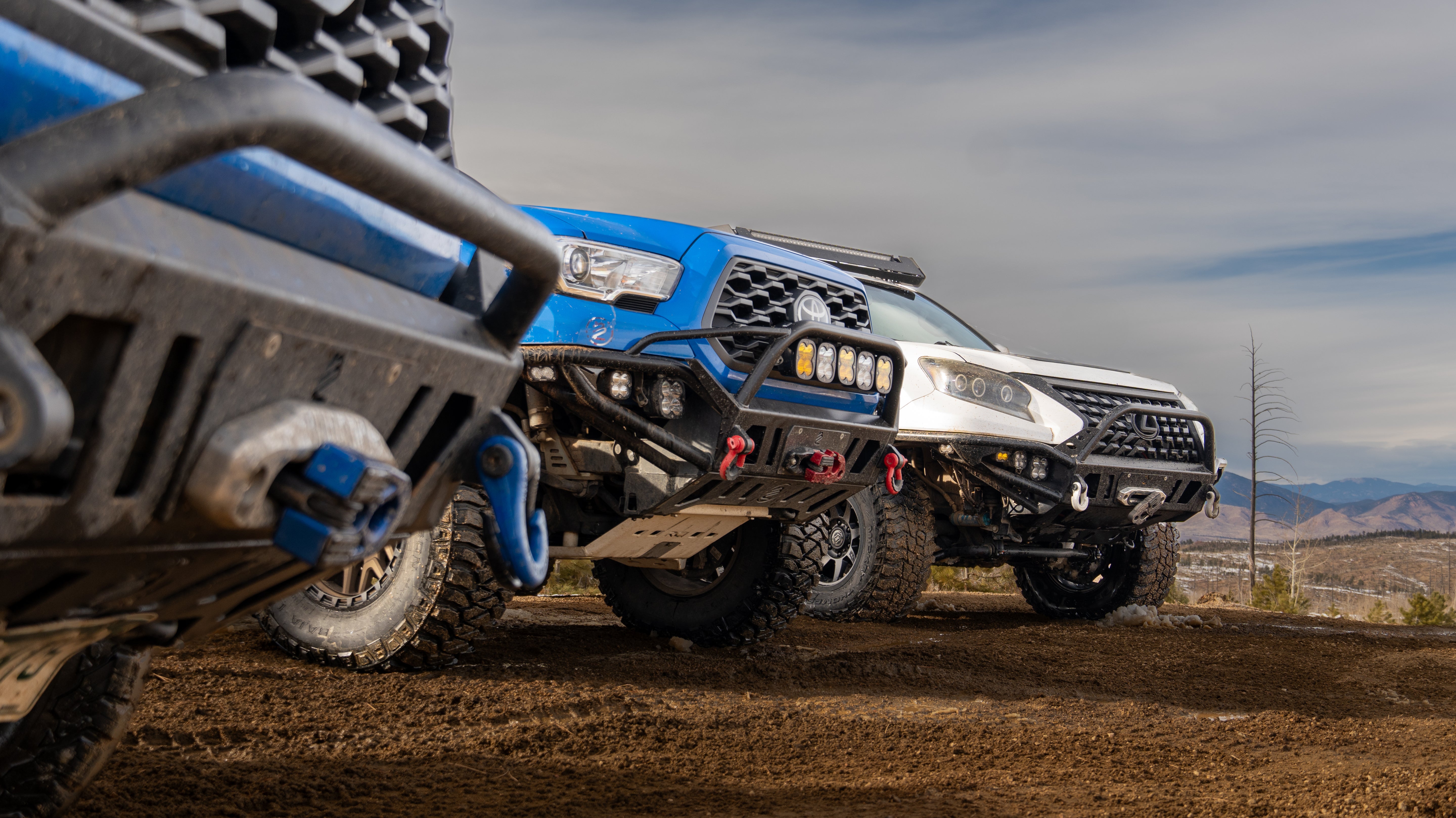
Vehicles like the newer Tacoma, Tundra, and especially the GX Series introduce layers of complexity that fundamentally change how front bumpers need to be designed. Sensors, safety systems, airflow requirements, tighter packaging, and refined driving dynamics all influence what makes a bumper actually work on today’s vehicles.
The result is that bumper design has evolved from simple fabrication into something much closer to full-system integration.
And that shift is where many aftermarket designs fall behind.

Modern Toyota Platforms Are More Sensitive to Weight
Older off-road builds were often more forgiving when it came to added weight. Suspension systems were simpler, ride expectations were lower, and the vehicles themselves weren’t tuned around refinement in the same way modern platforms are.
Today, adding a front bumper affects much more than ride height.
On modern Toyota vehicles, front-end weight influences:
-
Steering feel
-
Brake dive
-
Suspension response
-
Fuel efficiency
-
Electronic driving systems
This is especially noticeable on platforms like the GX 550, where factory tuning prioritizes both comfort and capability.
As a result, bumper design now requires a much tighter balance between protection and weight management.
Do modern Toyota trucks react differently to bumper weight?
Yes—newer suspension systems and vehicle tuning make weight balance far more noticeable than on older platforms.
Safety Systems Changed Front-End Packaging
One of the biggest shifts in modern bumper design is the presence of advanced safety systems.
Features like:
-
Radar cruise control
-
Parking sensors
-
Front cameras
-
Toyota Safety Sense (TSS)
all occupy space that older vehicles simply didn’t need to account for.
This changes bumper design in several ways:
-
Sensor positioning becomes critical
-
Certain materials or shapes can interfere with radar performance
-
Airflow around components must remain consistent
Designing around these systems requires precision—not just fabrication skill.
A bumper that physically fits the vehicle may still create issues if these integrations aren’t handled correctly.
Airflow Matters More Than Most People Realize
Older off-road builds often had simpler cooling demands. Modern turbocharged and electronically managed platforms generate more heat and rely heavily on carefully controlled airflow.
This means bumper design directly affects:
-
Radiator efficiency
-
Intercooler airflow
-
Transmission cooling
-
Overall thermal management
Aggressive styling that blocks airflow can create issues that don’t appear immediately, especially in:
-
High ambient temperatures
-
Long climbs
-
Towing conditions
-
Slow technical driving
A modern bumper has to protect the front end without compromising cooling performance.
Can a front bumper affect cooling performance?
Yes—poor airflow management can negatively impact cooling, especially on newer Toyota platforms.
Clearance Is More Complicated on Modern Vehicles
Improving approach angle used to be relatively straightforward: trim material, move the bumper higher, and reduce overhang.
Modern vehicles complicate that process because of:
-
Larger bodywork integration
-
Sensors and electronics
-
More complex crash structures
-
Tighter wheel well packaging
As a result, true high-clearance design now requires much more precision.
It’s no longer enough to simply remove material. The bumper has to improve clearance while maintaining:
-
Structural integrity
-
Sensor compatibility
-
Proper body alignment
That balance is significantly harder to achieve on modern Toyota platforms.
Recovery Loads Are Increasing
Modern overland and off-road builds are heavier than they used to be.
Larger tires, rooftop gear, additional fuel, camping equipment, and integrated systems all increase overall vehicle weight. That added mass directly affects recovery forces.
This means modern bumpers need stronger:
-
Recovery point integration
-
Winch mounting structures
-
Frame tie-ins
Recovery systems that may have been adequate years ago can become weak points on heavier modern builds.
Do newer off-road builds place more stress on bumpers?
Yes—modern builds are often significantly heavier, increasing recovery and impact loads.
Drivers Expect Better On-Road Behavior
Older off-road vehicles were often expected to sacrifice some comfort and drivability once modified.
That expectation has changed.
Modern Toyota owners want vehicles that:
-
Drive smoothly on-road
-
Remain quiet at highway speeds
-
Feel refined during daily use
-
Still perform off-road when needed
This changes bumper priorities considerably.
Noise, vibration, weight distribution, and aerodynamic behavior now matter far more than they once did. A bumper that performs well off-road but negatively affects daily drivability may not actually fit the platform it’s designed for.
Fitment Standards Are Higher Than Ever
Modern body lines are tighter and more refined, especially on vehicles like the GX 550 and newer Tundra models.
Poor fitment stands out immediately.
But fitment isn’t only cosmetic. Improper alignment can also lead to:
-
Increased vibration
-
Uneven load distribution
-
Mounting stress over time
This is why modern bumper development increasingly relies on:
-
CAD modeling
-
Vehicle scanning
-
Extensive test fitting
Precision has become part of functionality—not just appearance.
Why is fitment more important on modern Toyotas?
Because tighter tolerances and integrated systems leave less room for error in both appearance and performance.
Why Older Design Philosophies Still Show Up
Despite all these changes, many aftermarket bumpers still follow older design philosophies.
You still see designs that:
-
Prioritize bulk over balance
-
Add unnecessary forward weight
-
Ignore airflow and system integration
-
Focus heavily on appearance instead of vehicle dynamics
Some of these designs worked reasonably well on older platforms. On modern vehicles, the trade-offs become much more noticeable.
That’s why newer platforms require a more integrated design approach.
Where Lil B’s Approach Fits In
At Lil B’s Custom Fabrication, bumper design starts with understanding how modern Toyota platforms actually behave.
That means considering:
-
Weight distribution
-
Recovery loads
-
Sensor compatibility
-
Real-world clearance
-
Suspension interaction
The goal isn’t simply to build stronger armor—it’s to build bumpers that work as part of the vehicle instead of against it.
That’s especially important on modern Toyota platforms, where capability and refinement now exist together.
Conclusion: Modern Trucks Require Modern Design Thinking
Modern Toyota trucks and SUVs aren’t just updated versions of older platforms. They operate differently, respond differently to modifications, and require a different level of integration.
As a result, front bumper design has evolved far beyond basic protection.
Today, the best bumpers balance:
-
Strength and weight
-
Clearance and airflow
-
Recovery capability and drivability
-
Protection and system integration
Because on modern builds, performance doesn’t come from adding the most material—it comes from designing smarter around the platform itself.

Share:
Front Bumper + Suspension: How to Set Them Up Together
TSS-Compatible Front Bumpers: What Modern Toyota Owners Need to Know