

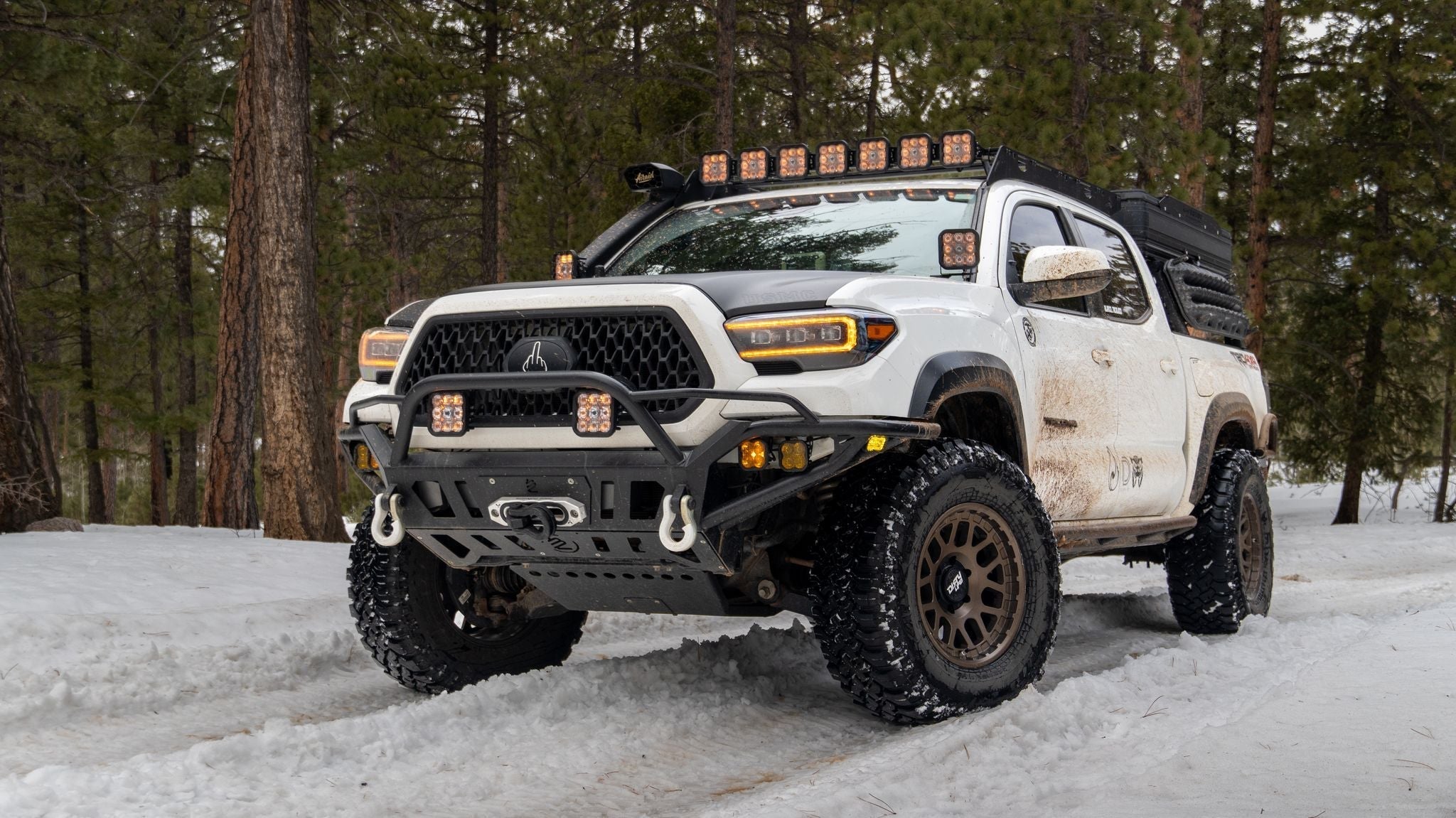
How To Choose The Best Material For Your Truck's Armor
Steel is stronger. Aluminum is lighter. But there is a bit more to it than that. When deciding between steel and aluminum, it really depends on how you actually use your Tacoma.
What type of off-roading are you doing? Where do you live? How hard are you wheeling?
Are you planning on hitting hard trails like the Rubicon, Holy Cross, and gnarly trails in Moab? Go with steel.
Are you doing mild overlanding on fire roads looking for a scenic campsite with your family? Aluminum might be a good option to keep the weight down. Building a go-fast Tacoma and rarely see rocks? Aluminum is a great choice.
Steel is by far the more common choice on serious builds, simply because steel is stronger. Regardless of how you wheel, you’re eventually going to hit a rock. Or maybe you cross paths with a deer on the road at night. Whether it’s your front or rear bumper, something is bound to happen eventually.
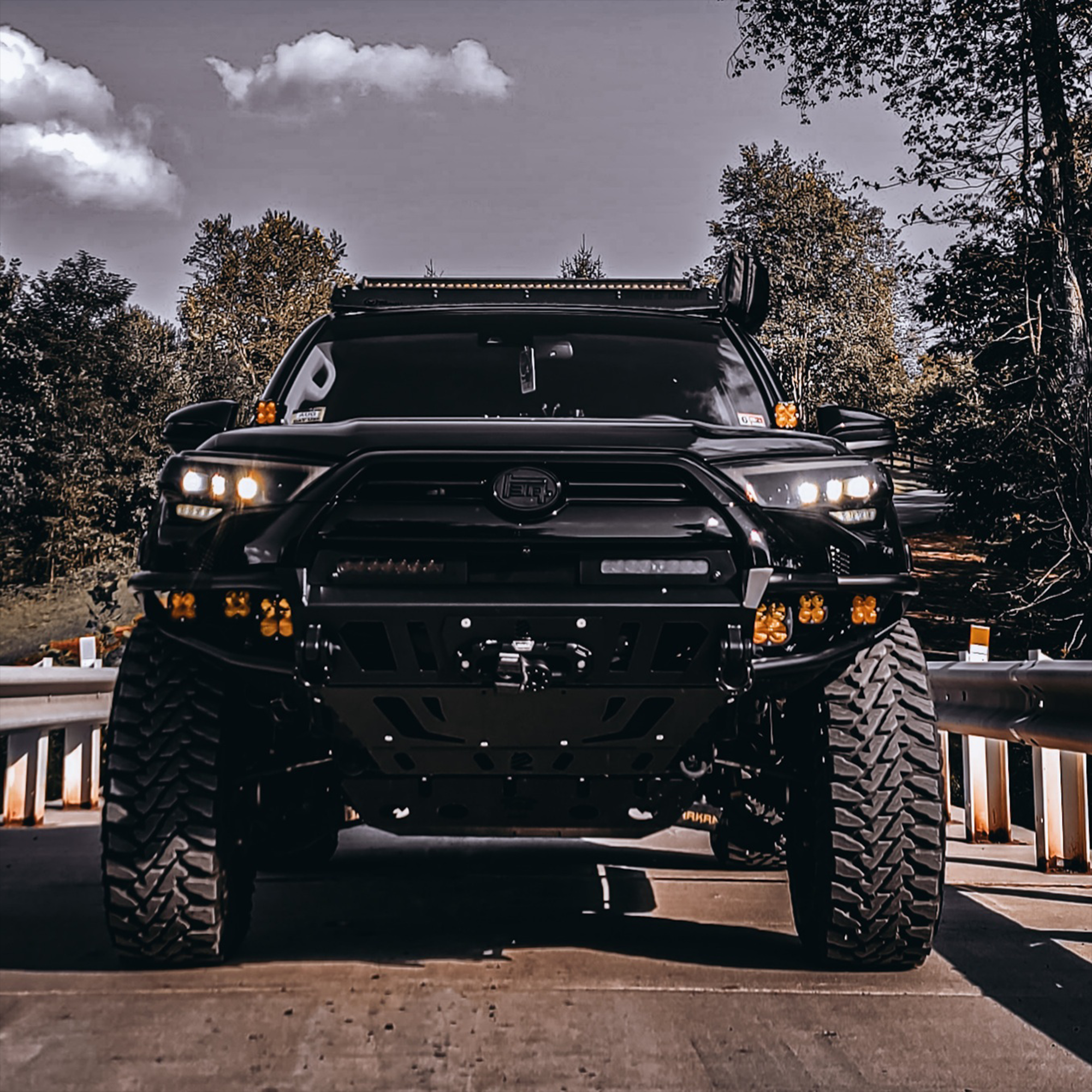
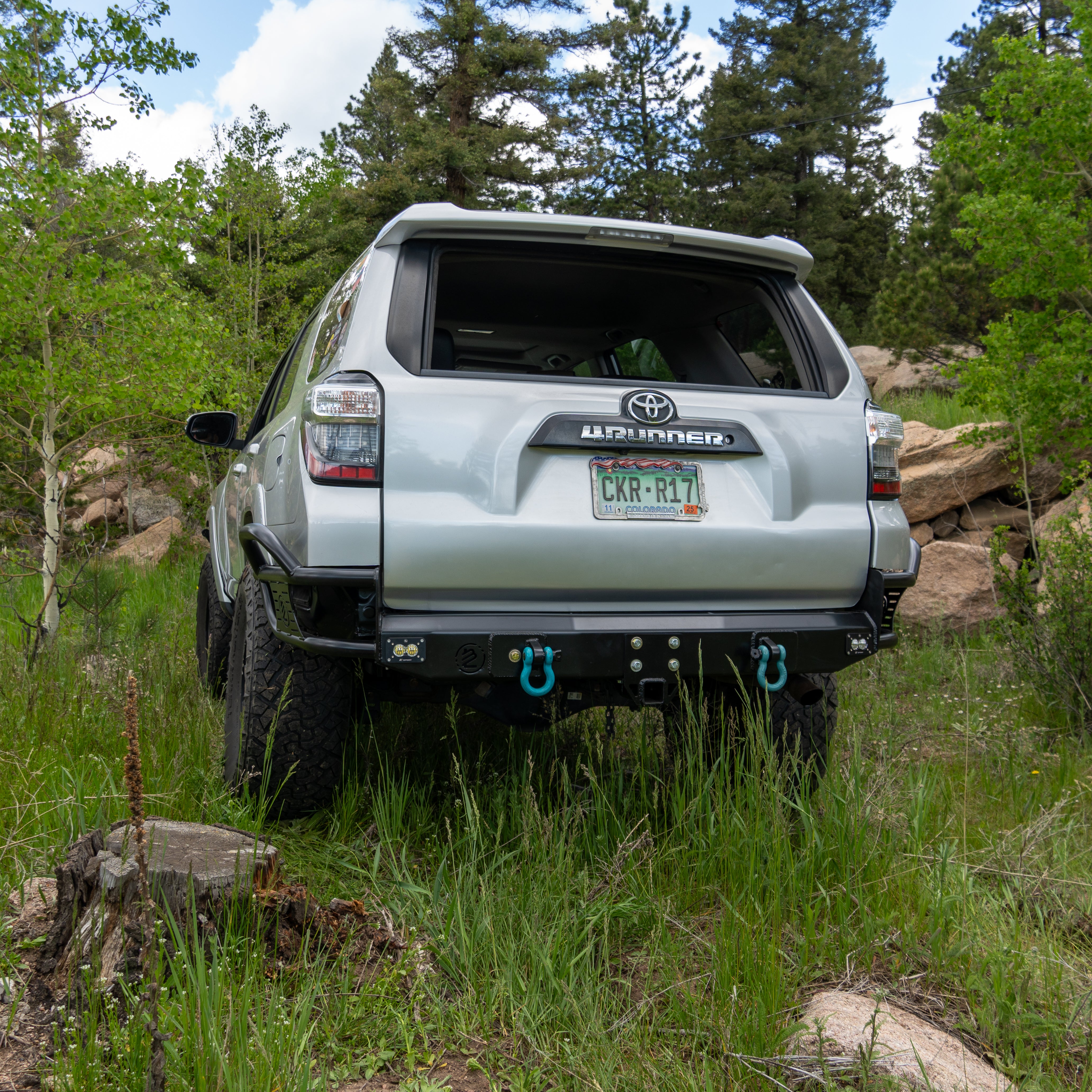
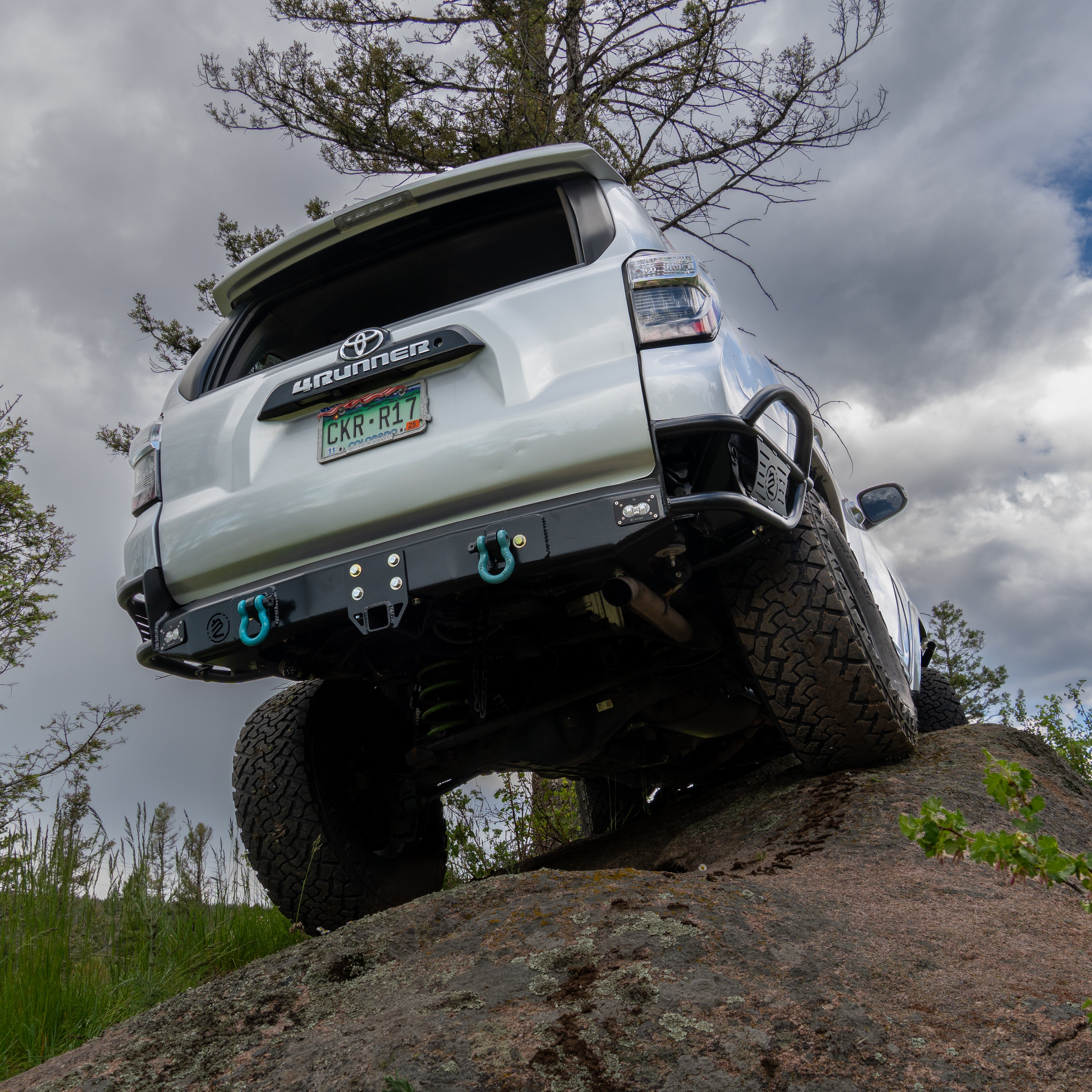
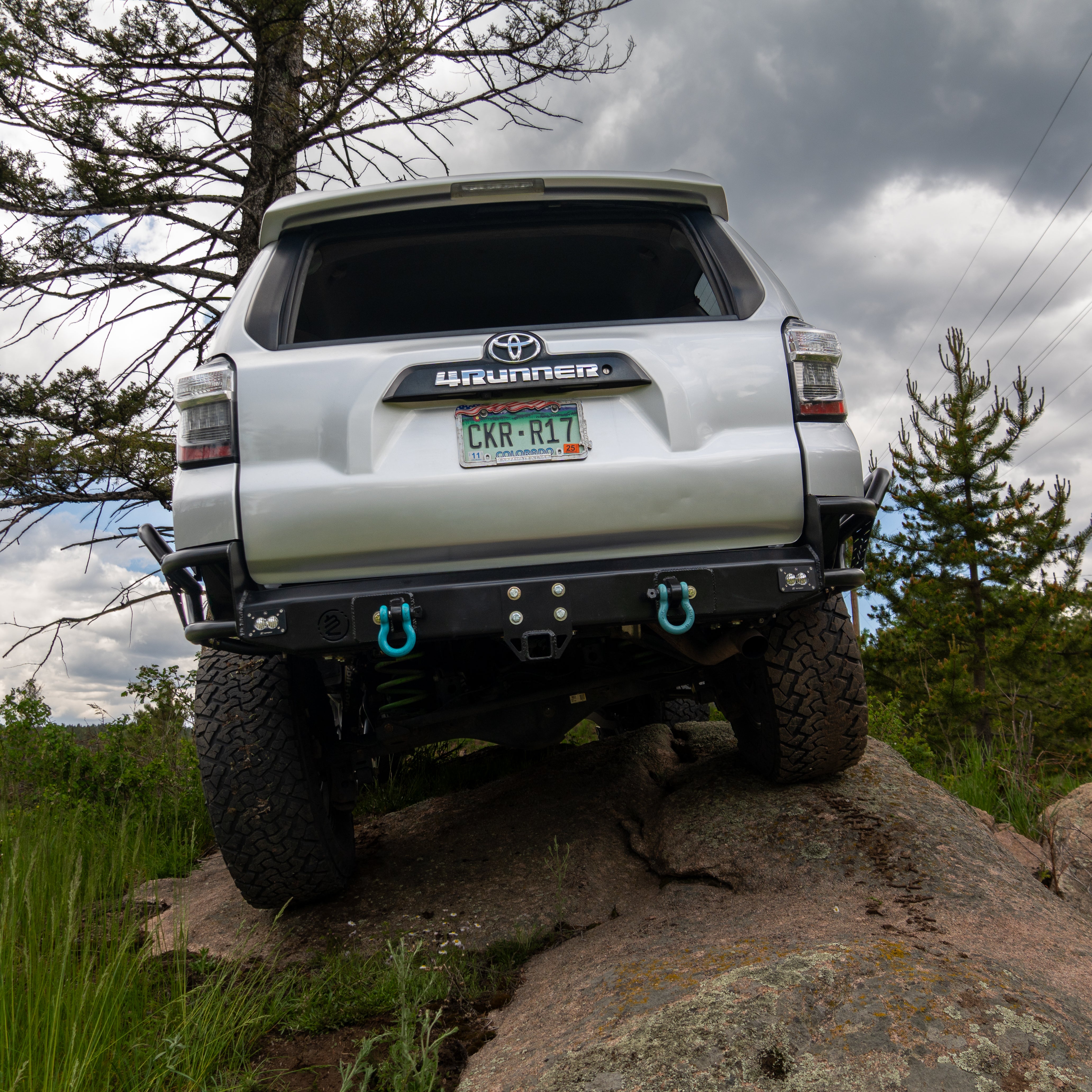
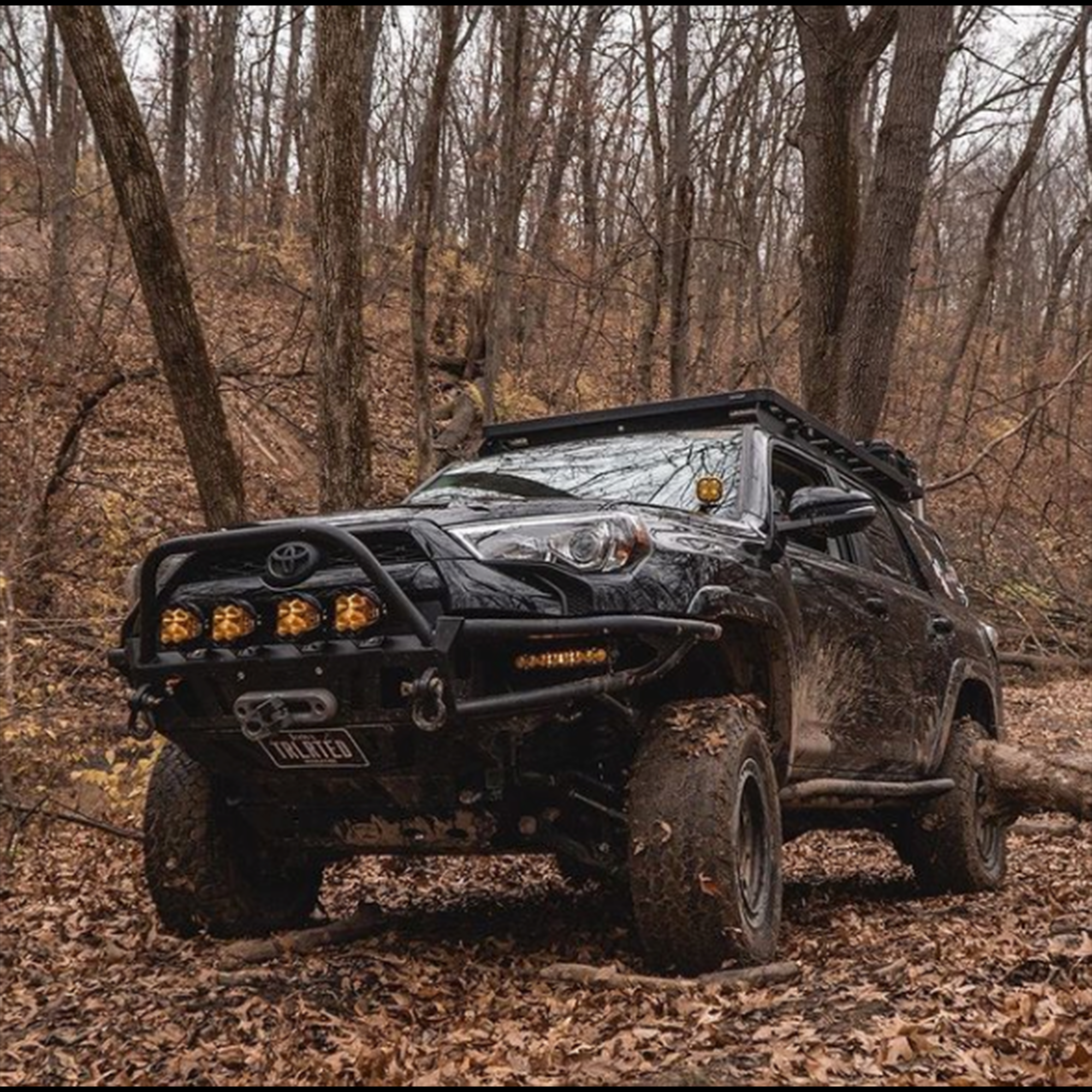
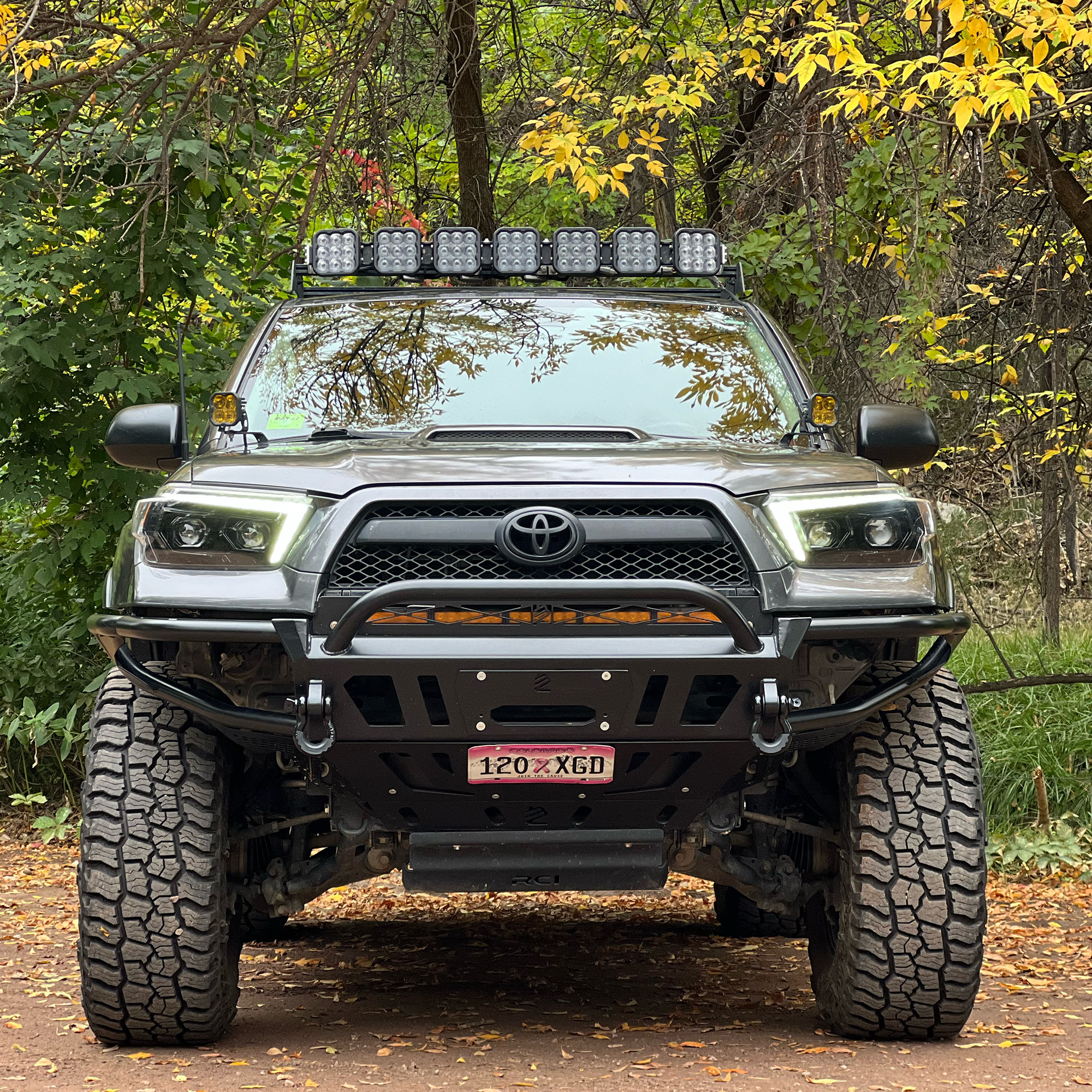
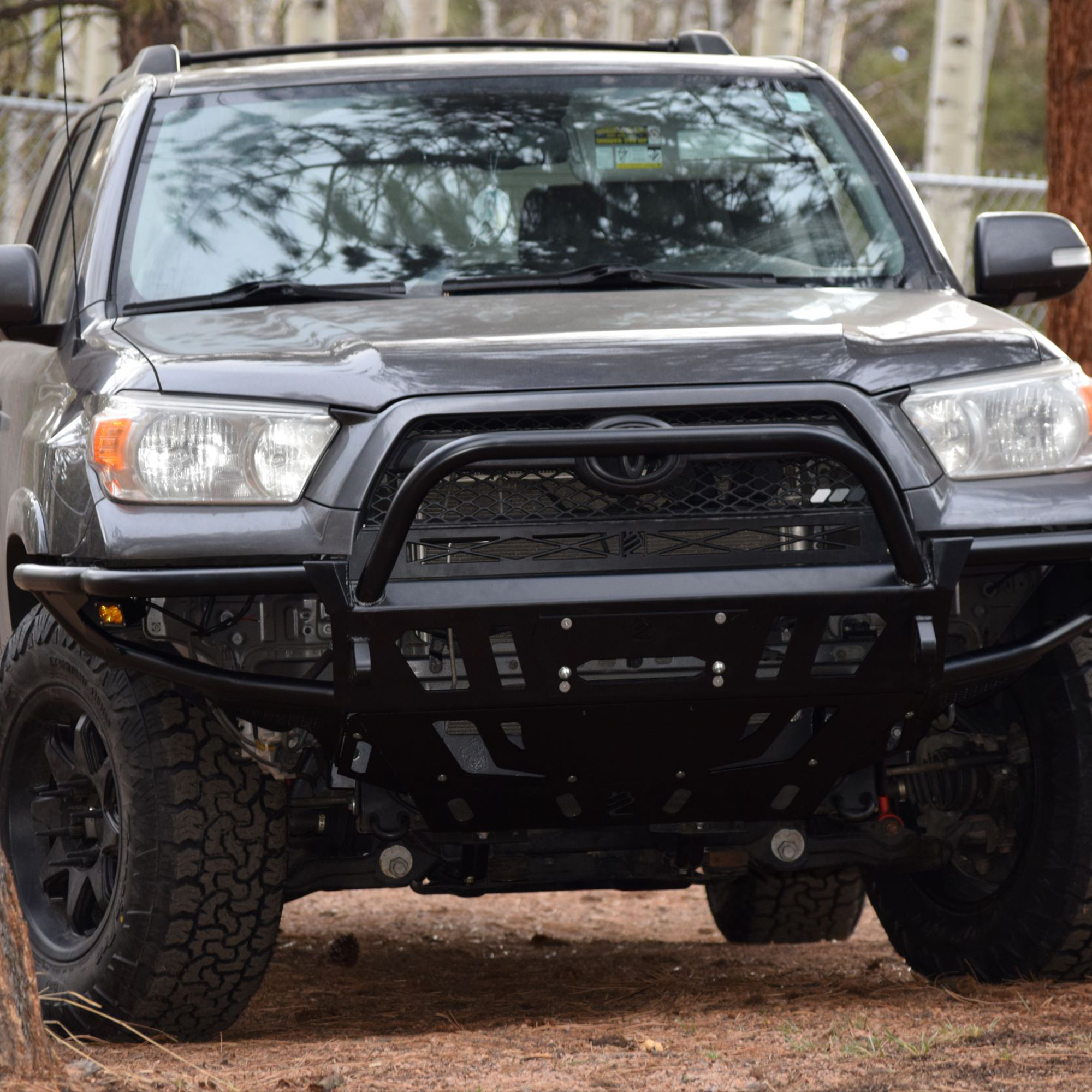
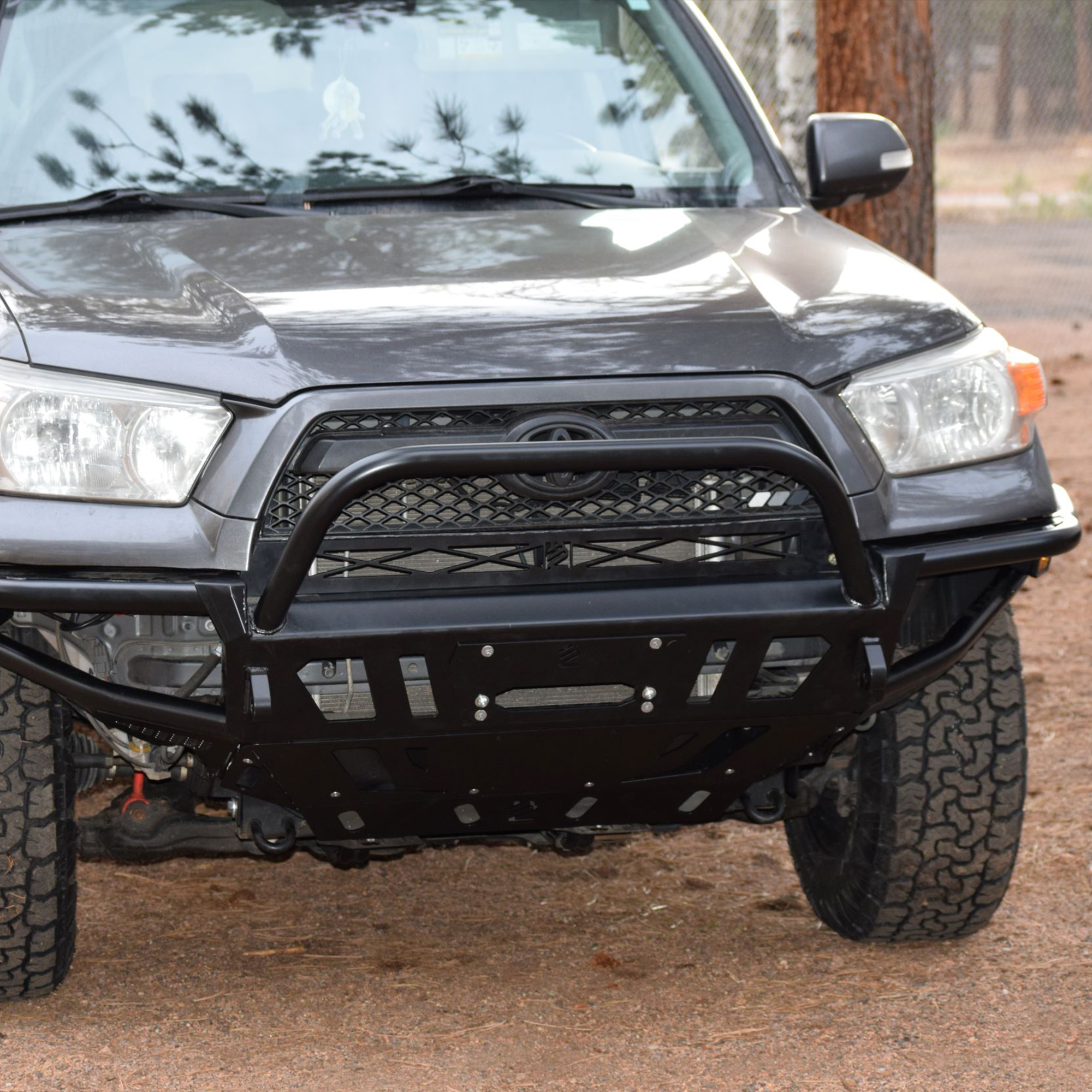
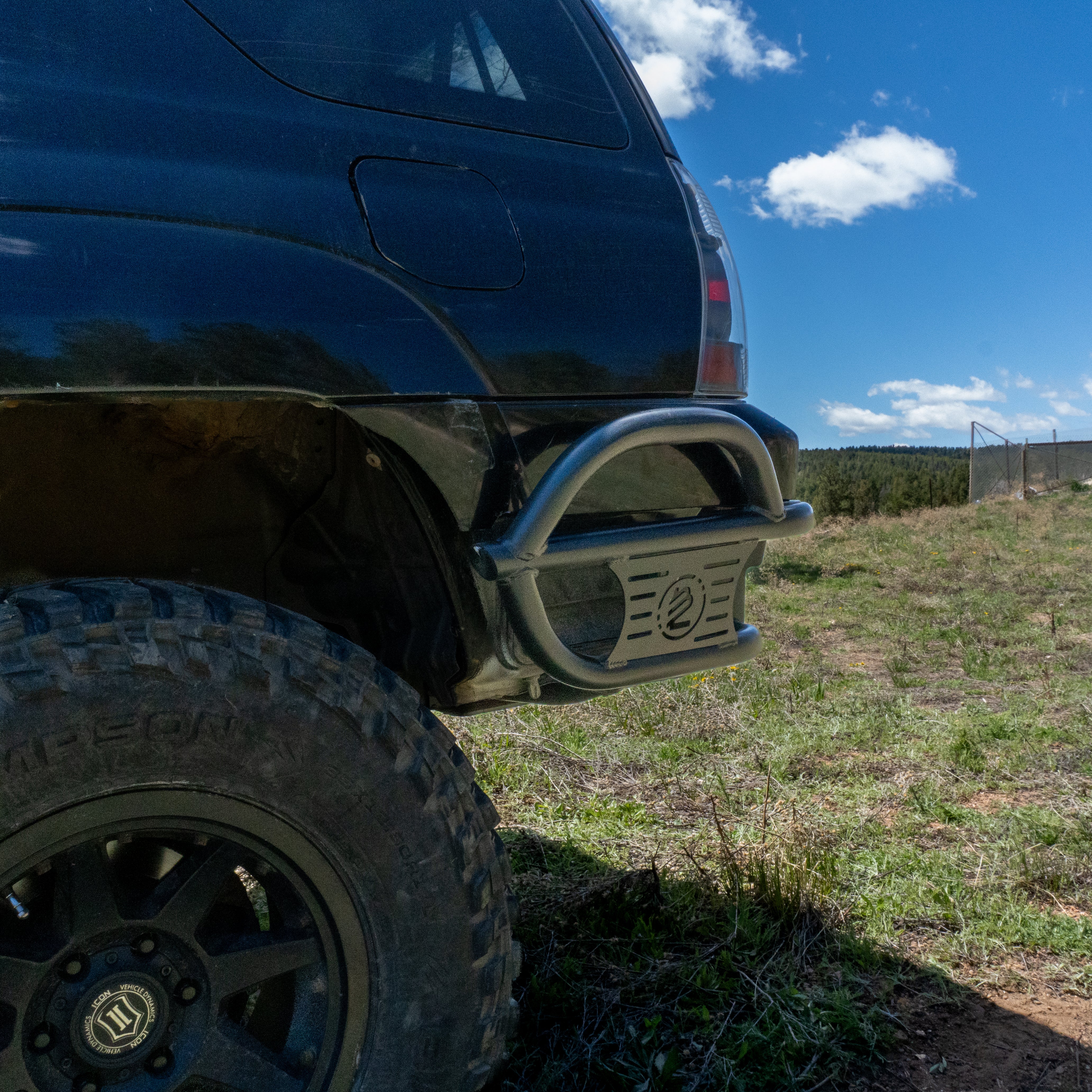
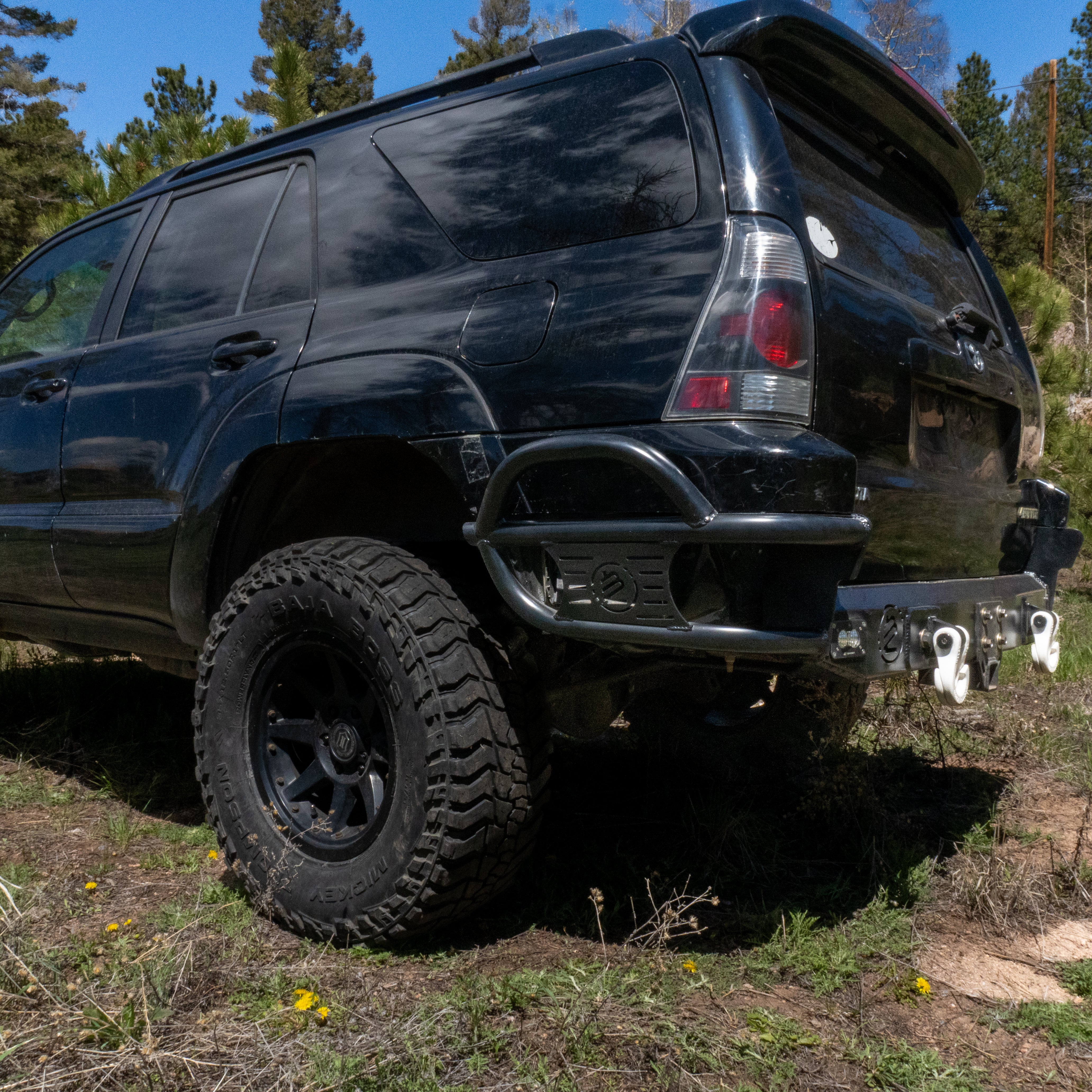
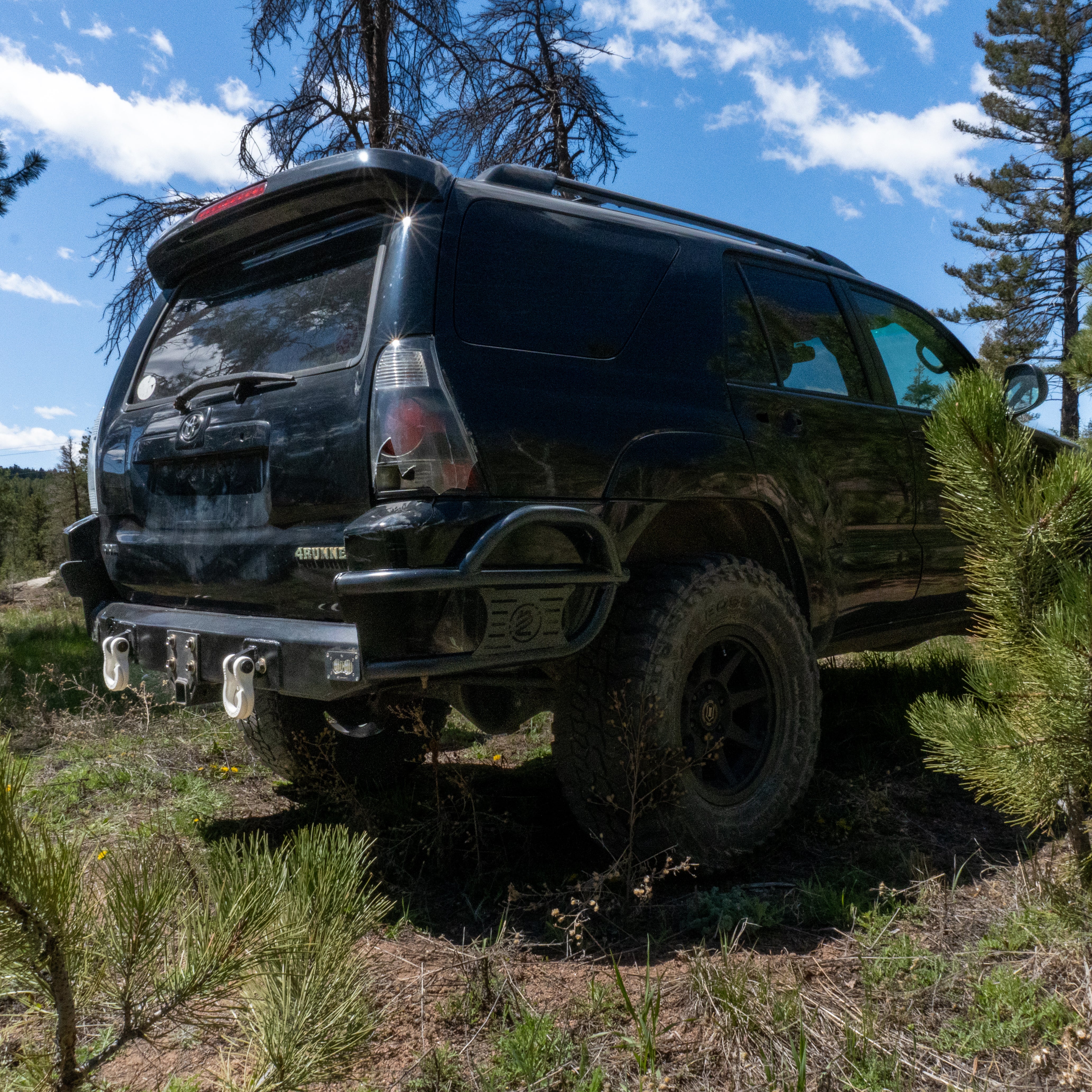
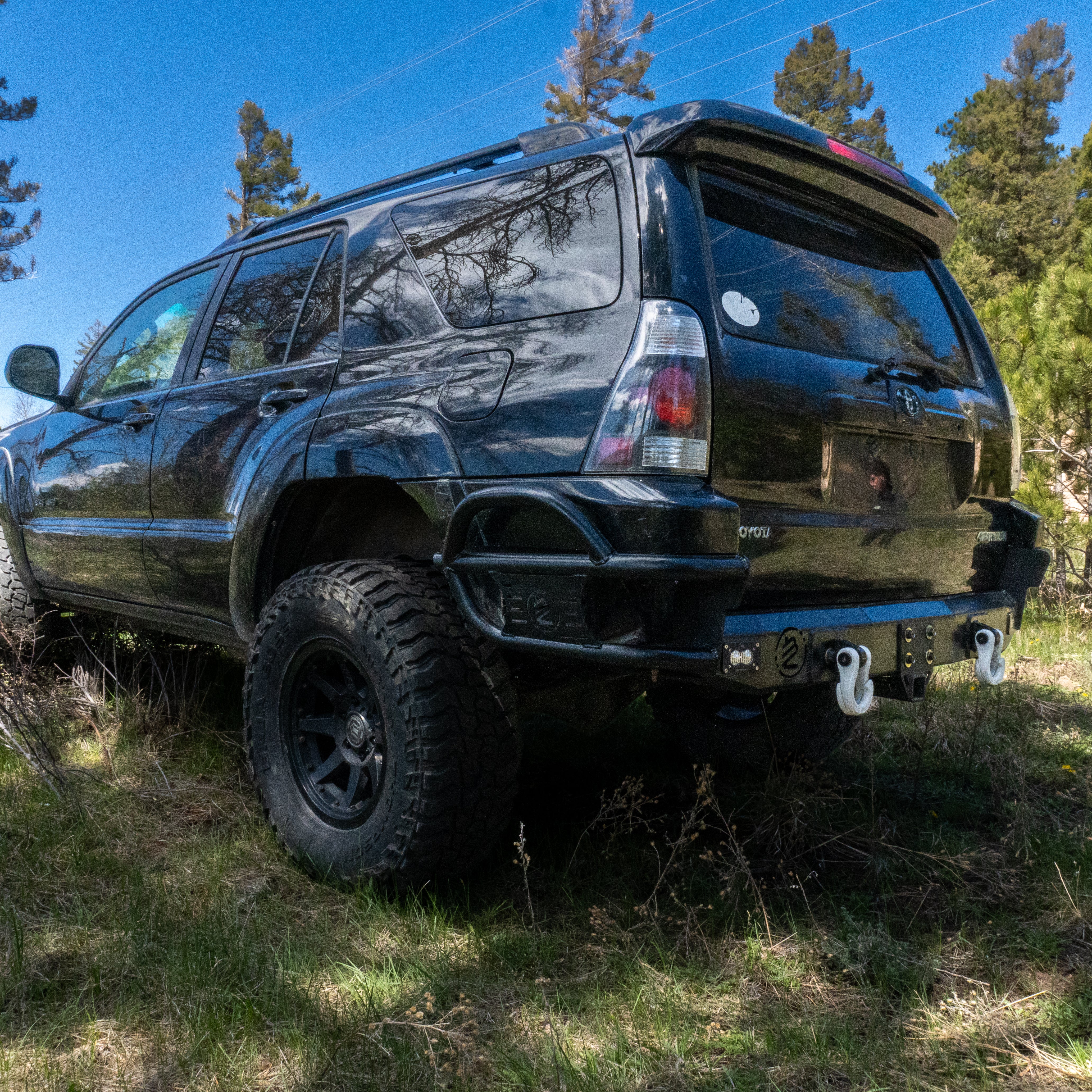
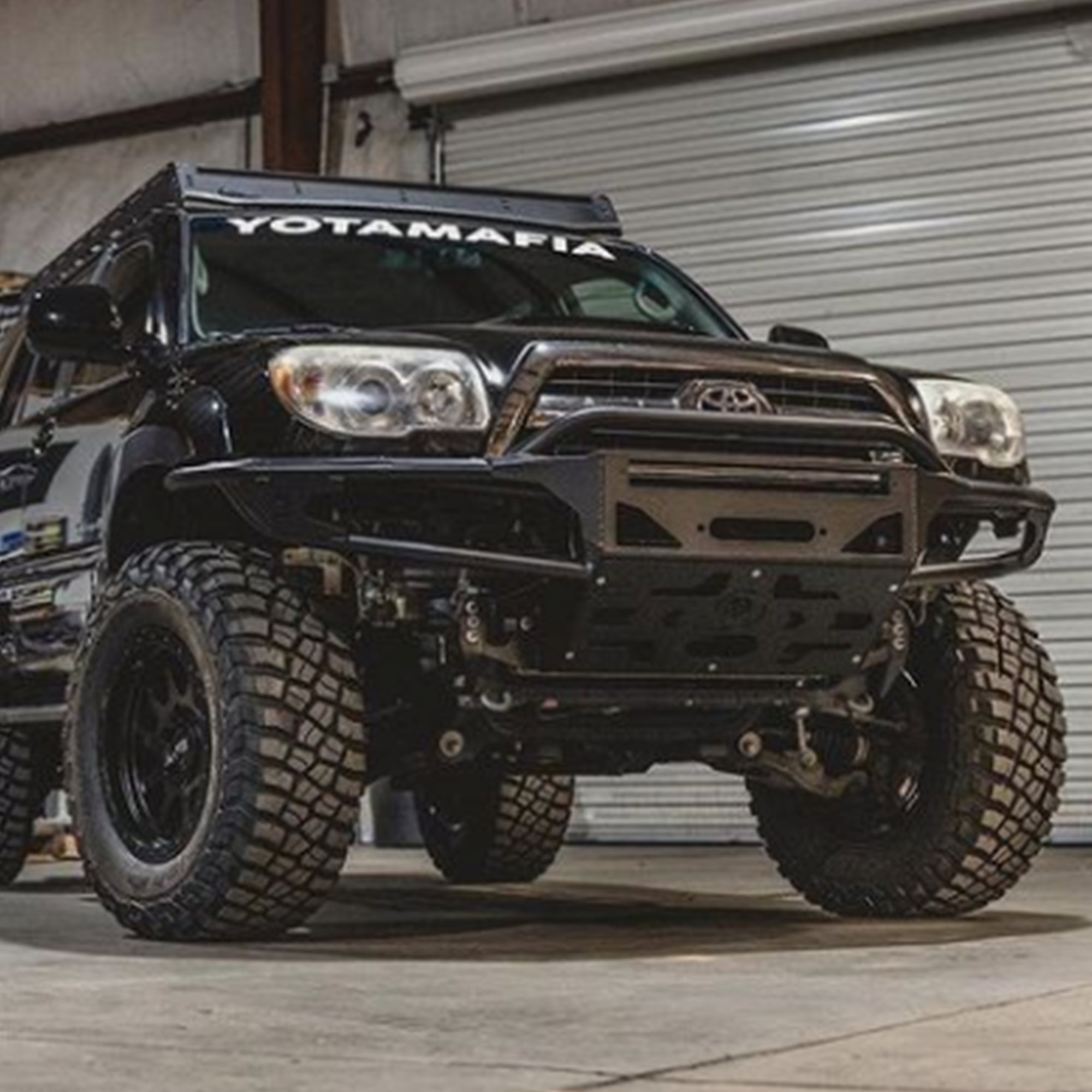
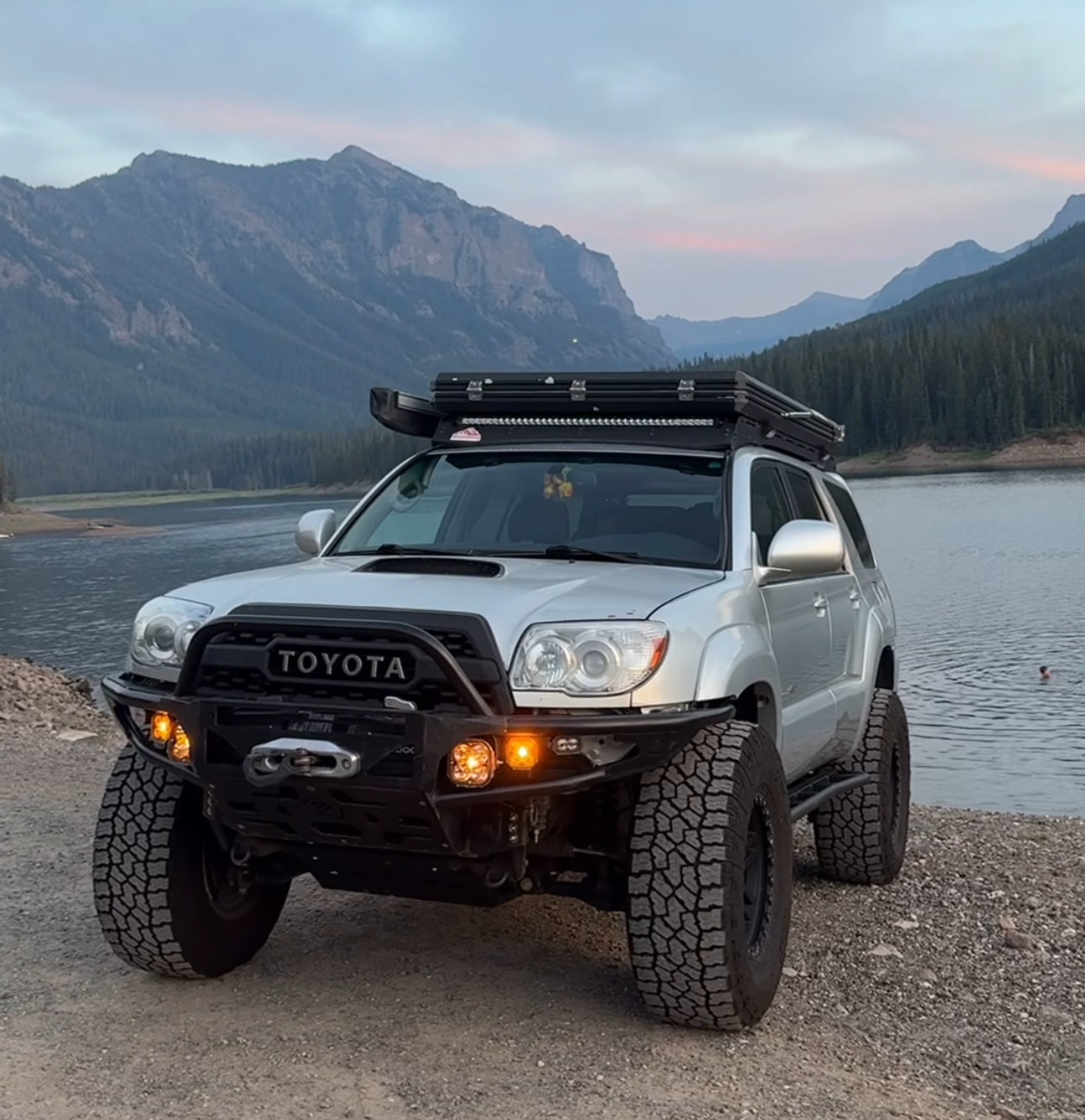
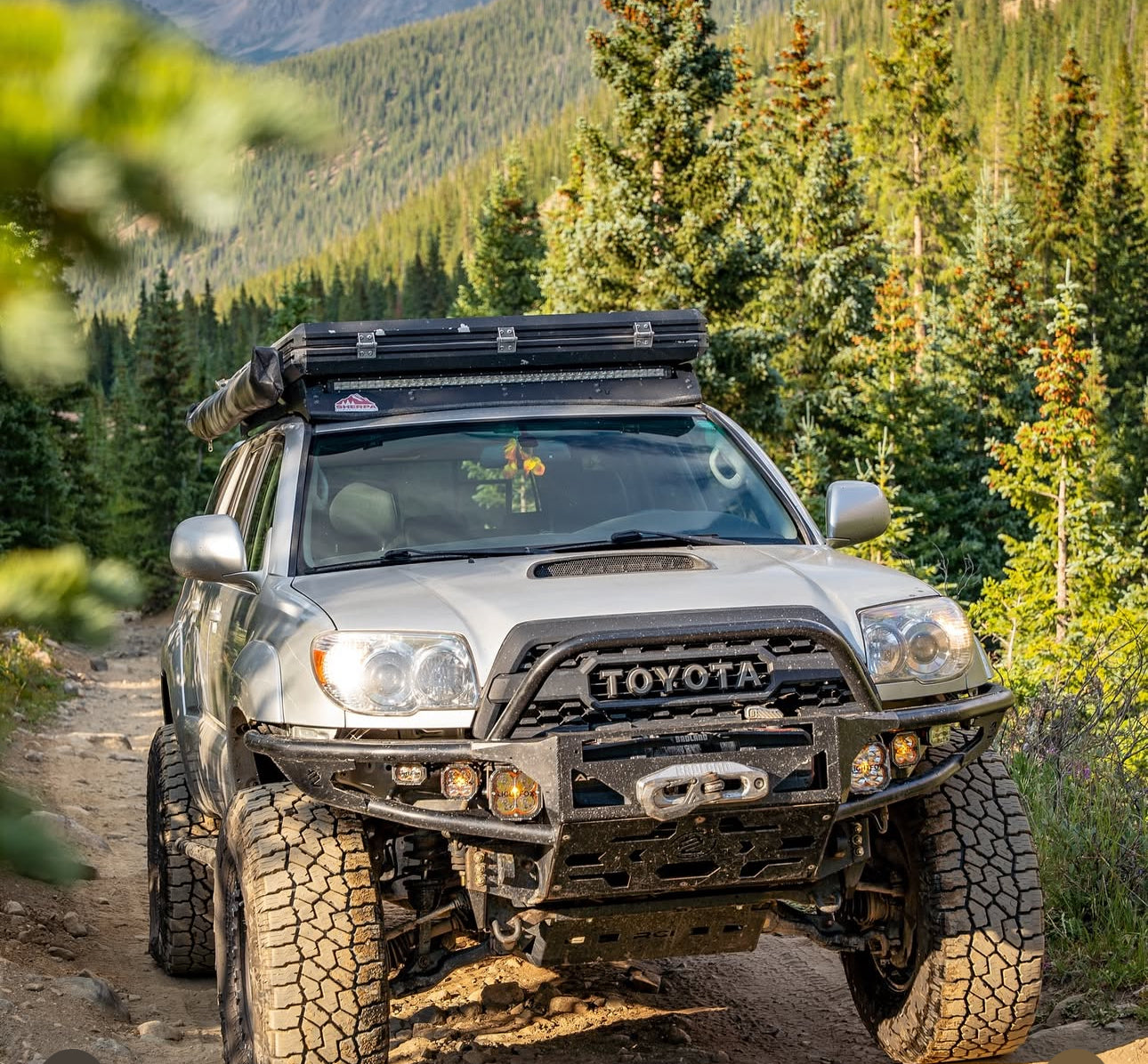
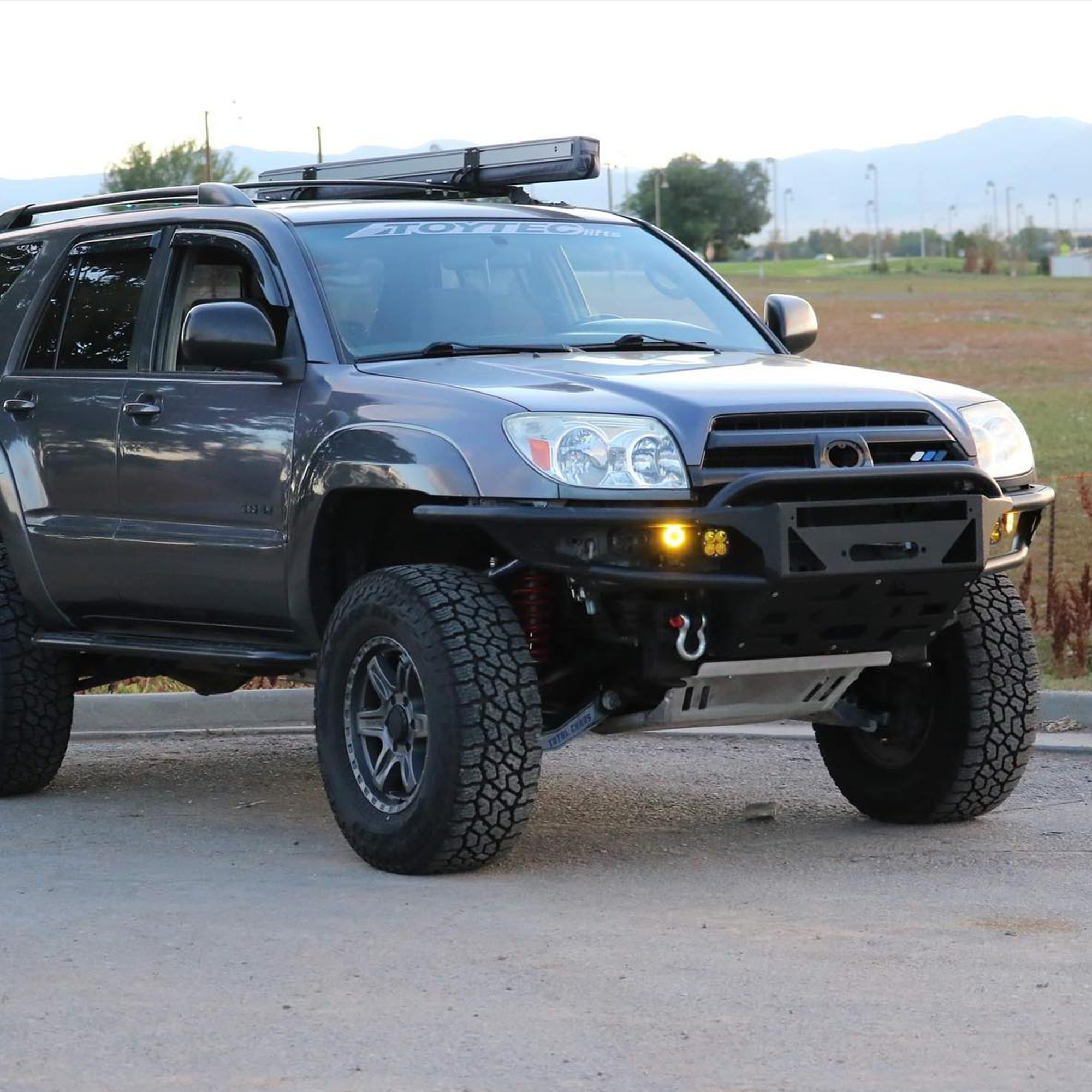
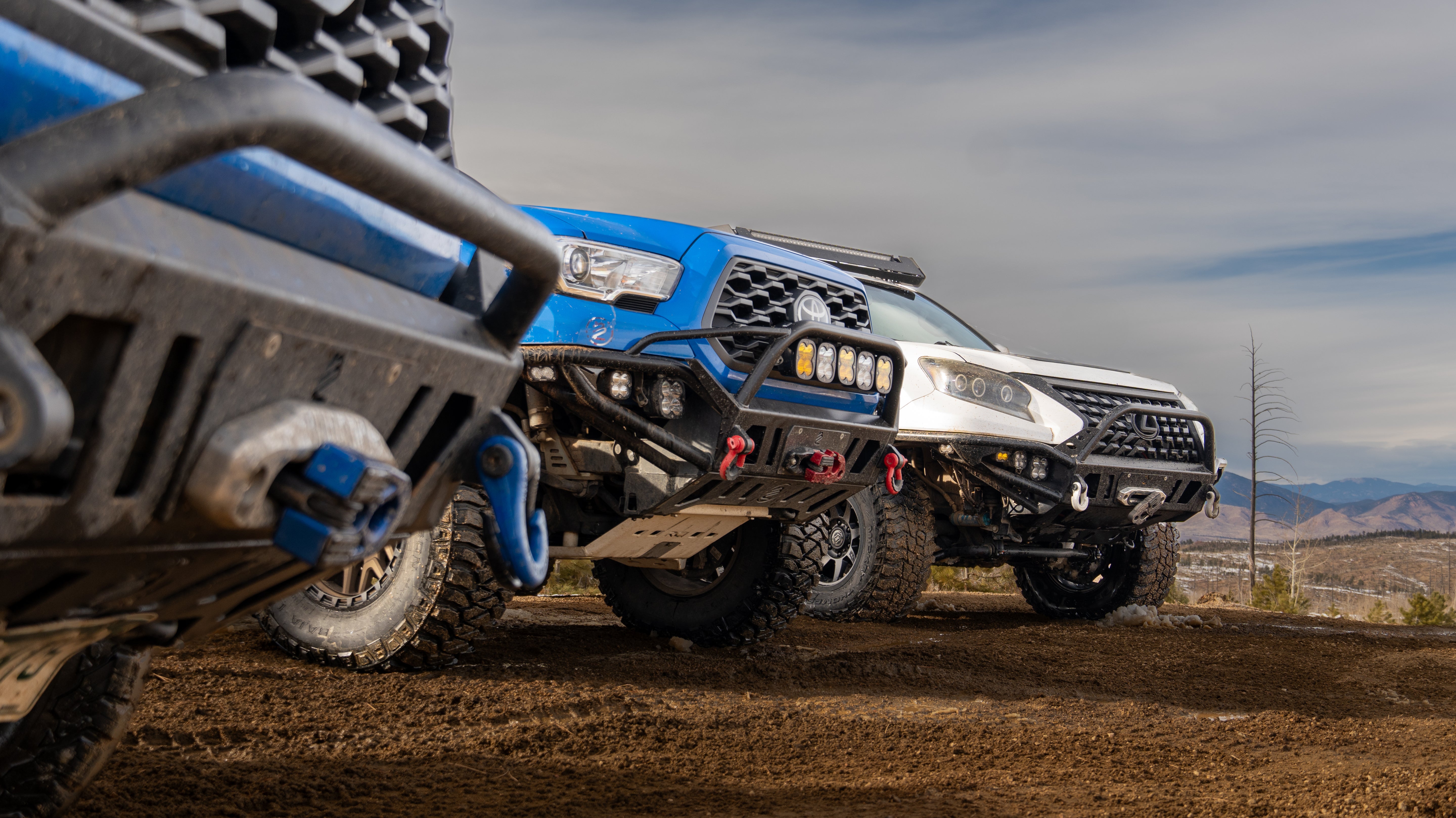
So, let’s talk about it. For quick reference, when we say hybrid bumper (our design), we’re referring to a plate center with tube sides/wings.
Check out our Tacoma bumpers...
Steel Vs. Aluminum Bumpers

Aluminum is more designed for the go-fast guys and overlanders, and steel is more designed for the rock crawler, rock lander, and overland crowd.
Steel is for the trucks that will take big hits or for a build that’s planning to eventually hit a trail where things get tight and narrow or rocky and technical.
Steel is great for ledges, rocks, and tight sections where your bumper might rub up or slam into a tree or rock. When you’re off-road, your bumper will touch something; it’s pretty much inevitable. Steel does the best job at taking repeated hits and holding its shape.
What about rust? Aluminum won't rust. But it does still experience corrosion. More on that soon.
Steel will rust once the powder coating or paint has been removed after impacts on rocks. The majority of guys who have steel bumpers quickly sand the area down and paint over the bare steel, and the bumper looks new again. Touch-ups are relatively easy. The steel used for bumpers is also much different than your average body panel. It’s considerably thicker and takes much longer to break down. So rust doesn’t usually compromise it.
Aluminum does not rust, but is still impacted by the environment. It ideally should be powder coated as well. But when it comes to impacts, it will fold and crumple or crack more easily under hard use. So regardless of which material you choose for your bumper, both steel and aluminum require touch-ups… if you want them looking as close to new as possible. The downside of aluminum, again, is that it’s weaker than steel and after any hard impacts, you will have a deformed bumper that’s harder to repair.
At the end of the day, if you plan on any moderate to hard off-roading, steel is the clear winner for a front and/or rear bumper.
If you plan on building a go-fast prerunner, a low-profile aluminum version is a good option to keep the weight down.
If your Tacoma often sees rocks, ledges, tight technical trails, or repeated bumper contact, we’d choose steel.
How Much Weight Are We Actually Talking About?

So let's talk pounds. As of 2026, bolt-on steel front bumpers across the market run around 100-175 lbs., depending on construction and configuration. There are lighter steel options, but many use different construction styles and aren’t directly comparable in terms of coverage, mounting, or intended use.
Aluminum front bumpers with comparable winch coverage land around 80-100 lbs. That's comparing 1/4" aluminum to 3/16" steel, which is how most shops build them, so the aluminum is not half the weight at the same thickness. It's lighter because you're running a thicker plate of a lighter metal, which nets a lower overall weight.
The old heavy-plate steel bumpers from about 2000 to 2015 are where the weight really piles up.
Bare, before a winch goes on, many ran 175-200 lbs. The heaviest ran 250+ lbs. Loaded up - winch, lights, the works - almost 300 lbs. on the front-end of your Tacoma. Insane.
Our high-clearance hybrid Tacoma bumpers run ~105 lbs. Bare with no hoops or bull bars. Add a winch, and you're at ~150 lbs. Add about six Baja Squadrons and the whole package lands at ~156 lbs., give or take, depending on the bumper design and light spec. That's the number calculated from our 2nd Gen Tacoma Hybrid Bumper, the 3rd Gen Tacoma Hybrid Bumper, and the 4th Gen, with some margin for different options.
When comparing a similarly equipped aluminum bumper to our hybrid design, will saving another ~20-30 lbs. justify the loss in impact resistance? Our answer is no. Modern hybrid bumpers have narrowed the gap between steel and aluminum significantly. There are other places where you could more effectively trim that weight.
Why Steel Is Usually The Better Option

You hit your front bumper on the trail. A steel one lightly dents and bends before major failure. Aluminum is generally more prone to significant deformation and can crack or tear under severe impacts.
If you hit a steel bumper hard on a rock or a ledge, it usually doesn't budge. And if it does, it will deform only slightly and keep going.
Aluminum under the same hit is more likely to crack or fold, and depending on how hard the hit is, that means your bumper will never look the same again. Repairing or replacing aluminum is more expensive than steel. Aluminum generally requires more specialized welding and repair work than steel, which can make trail damage more expensive or difficult to fix. Or worst case, you can’t repair it, and you need a new bumper.
Steel also handles a winch, recovery points, and a frame tie-in without issue, as long as the brackets behind it are doing their job.
It's built for repeated abuse.
Mounting Is Where the Strength Comes From

An aluminum bumper can carry a winch when it's built for it. But it is still more prone to deformation. Ours are overbuilt and can easily handle a 10k winch.
The mounting is what matters, and the mounts are where we put the engineering and experience.
Most front bumpers on the market bolt to the frame with relatively few bolts. Our Tacoma armor doesn't. It mounts using a series of brackets: a frame support bracket that bolts through the crossmember to the frame, a mounting plate that ties the bumper to the crossmember underneath, and an upper brace up at the body mount. On the 3rd Gen, that's a 3/16" hot-rolled frame support bracket with a 1/2" Grade 8 bolt through the crossmember to the frame, a welded-on 1/4" plate under the crossmember, and a 3/16" upper brace on the body mount with Grade 8 3/8" hardware.
Three attachment points instead of one, so a hit spreads across the frame instead of loading a single spot.
Material is one part of it.
How the bumper is attached to the truck is the other part, and the one most people never look at. Most front-bumper failures start right at the mounting points, and we cover that separately.
The Bottom Line

A hybrid design is hands down the way around the steel-vs-aluminum trade-off: the strength of steel in a lighter weight package.
~105 lbs. bare, against heavier alternatives at 175-200 lbs., and made of heavy-plate steel, with the multi-point mounting doing the structural work. Check out the Tacoma hybrid bumper lineup and see the numbers for yourself. The 2nd, 3rd, and 4th Gen bumpers all share that ~105 lb. bare weight.

Share:
Managing Armor Weight on Your Tacoma: Plate Steel vs. Hybrid Bumpers
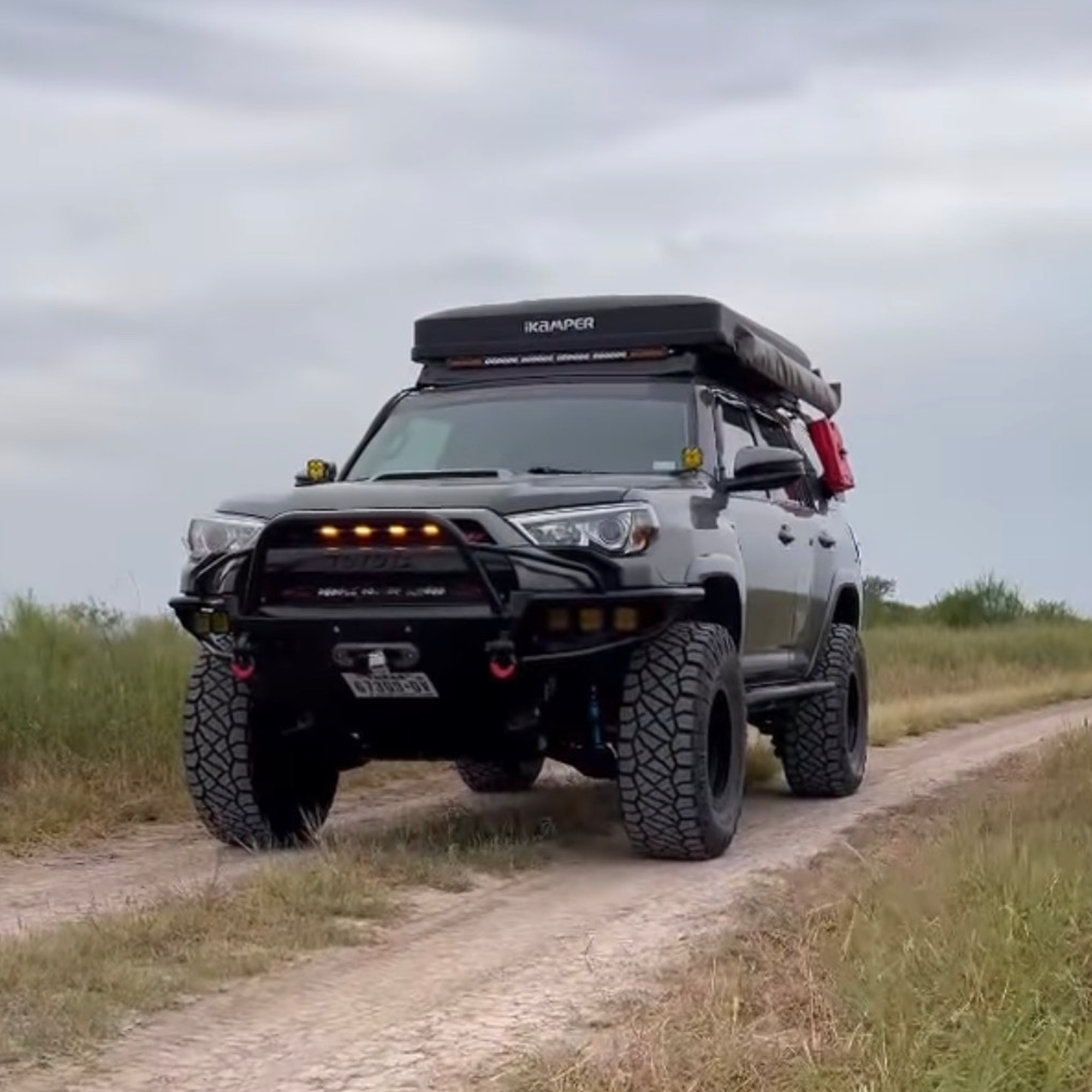
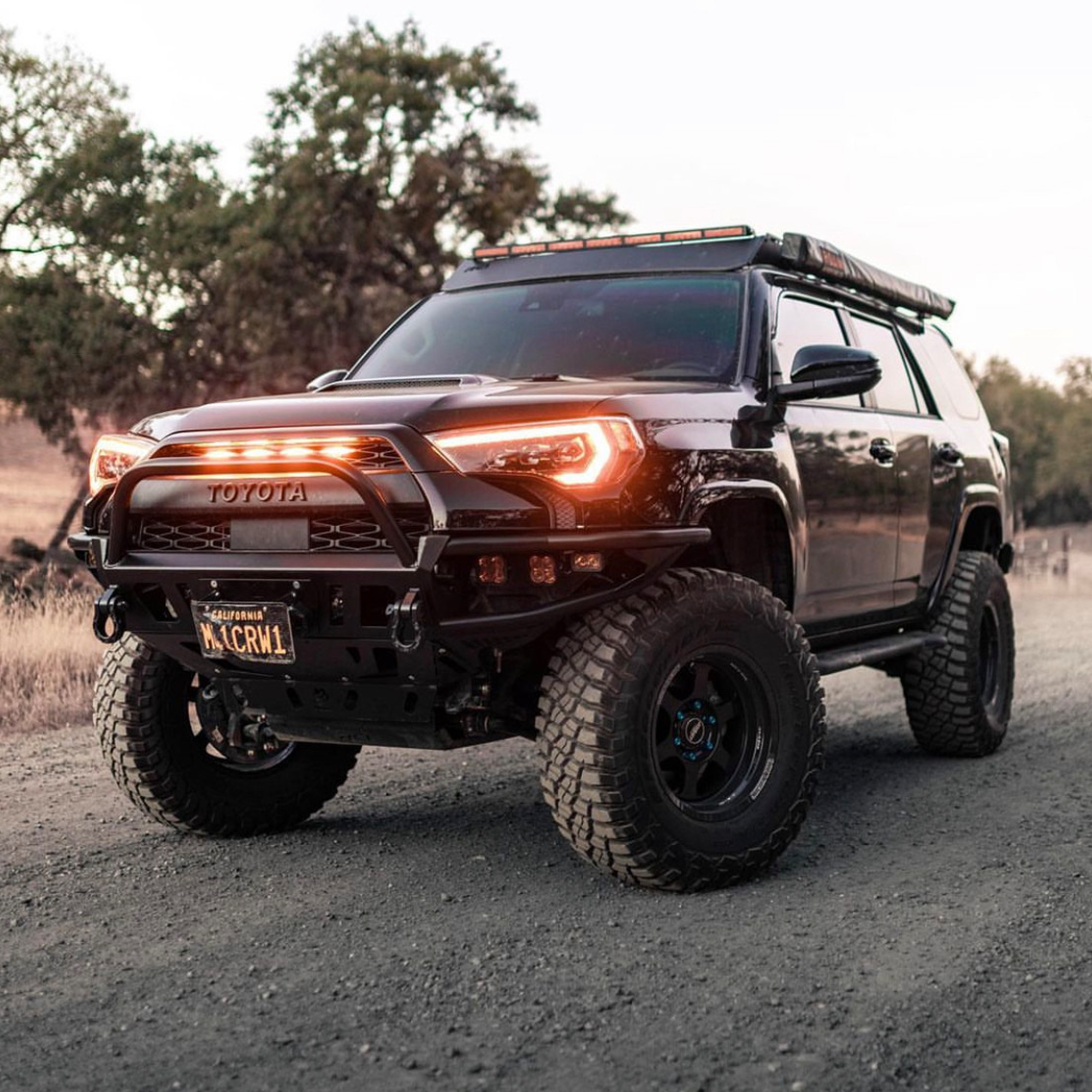
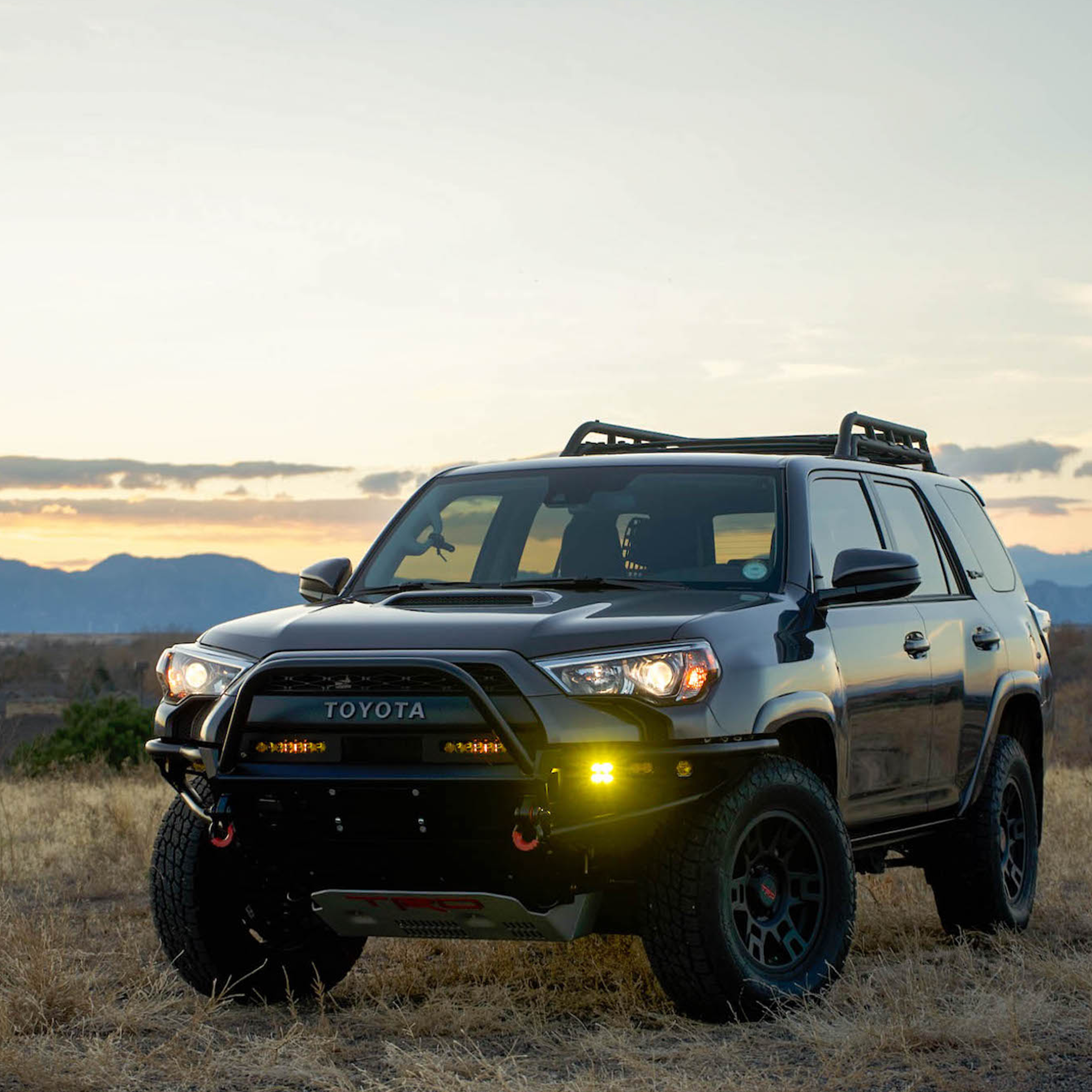
Build Feature: Mammoth 6th Gen 4Runner Long Travel Build With Hybrid High Clearance Front Bumper